


Introduction
Best EV Buying Guide for Indians (2025)-If you’re reading this, chances are you’re considering if an electric car is “the right move now”. With growing talk about climate change, rising fuel prices, and the automotive industry pivoting towards electrification, the appeal of “going electric” is louder than ever. But an electric vehicle (EV) is a different kind of purchase — one that requires new questions: What range do I really need? How many chargers are around? Will the battery die soon? Can I afford it? Will resale value hold?
In India especially, 2025 is shaping up to be a landmark year. New models are entering, battery costs are down, the charging network is expanding, and government policies are nudging consumers. Yet the decision remains multi-dimensional: your budget, your driving pattern, region, comfort with technology, brand support — all matter.
In this comprehensive guide I’ll walk you through everything: what electric cars are, how they differ from petrol/diesel vehicles, the current Indian landscape of models and infrastructure, how to choose the right one for you, and a step-by-step buying and ownership process. I’ll also showcase real case studies of models in India in 2025 and answer key FAQs. By the end of this article you should feel confident about making a well-informed purchase decision.
Get Some Information about SUV & Sedan reviews 2025
Understanding Electric Cars-Best EV Buying Guide for Indians (2025)
What is an electric car? (BEV, PHEV, hybrid explained)
At its core, an electric car uses electricity stored in batteries to power an electric motor. There are several variants:
- BEV (Battery Electric Vehicle): Fully electric — no internal-combustion engine (ICE) at all. You plug it in, drive. For example many of the new models in India are BEVs.
- PHEV (Plug-in Hybrid Electric Vehicle): Has both an electric motor (with battery) + an ICE. You can plug in the battery, but you also have petrol/diesel engine as backup. In India these are less common today.
- Hybrid (HEV, mild‐hybrid): Uses electric motor assist + ICE; you cannot plug it in; battery re-charges through braking/regeneration. These deliver efficiency gains but less “pure EV experience”.
Why this matters: Understanding the variant is crucial because charging, range, maintenance, cost all differ. When you see “electric car buying guide” you should first ask: is the model truly full-electric (BEV) or a hybrid?
How they differ from traditional internal-combustion vehicles (ICE)-Best EV Buying Guide for Indians (2025)
Here are some of the key differences and considerations:
- Fuel vs electricity: Instead of filling petrol/diesel, you charge. That shifts your “refuel” behaviour and cost structure.
- Range & refilling infrastructure: ICE vehicles have decades of infrastructure; EVs are catching up, but you need to consider charger access and charging time.
- Maintenance: Fewer moving parts for BEV (e.g., no oil changes, fewer engine components) which can translate into lower maintenance cost over time. But battery health is new factor.
- Initial cost vs operating cost: Many EVs cost a bit more upfront, but running cost (electricity + lesser service) can be lower.
- Driving experience: Instant torque, quiet ride, different feel. But the “refuel” pause is replaced by “charge” pause.
- Resale & technological obsolescence: Battery tech advances; so when you buy today you must consider what the battery will be like in 5-8 years.
Key metrics: battery size, range, charging time, lifecycle cost-Best EV Buying Guide for Indians (2025)
When evaluating an electric car, these are your key numbers:
- Battery capacity (kWh): Larger means more potential range but higher cost.
- Claimed range: The manufacturer’s range under test cycle — useful benchmark but real world will vary.
- Real-world range: What you realistically get given your driving pattern, weather, usage of AC/heating etc.
- Charging time & infrastructure: How long to charge at home (AC charger) and publicly (DC fast charger), and how many chargers are available in your area.
- Cost per km: Not just the sticker price but the cost of electricity, maintenance, battery replacement (if needed), and depreciation.
- Battery health & warranty: The battery degrades with time and usage; warranty coverage and battery replacement cost are important.
Benefits & challenges of electric cars (environment, running cost vs infrastructure, range anxiety)
Benefits:
- Zero tail-pipe emissions (for BEVs) which helps your carbon footprint and urban air quality.
- Lower running cost: Electricity is often cheaper per km than petrol/diesel; fewer service items.
- Government incentives: Many states and central governments offer subsidies, tax breaks.
- Quiet, smooth driving experience.
- Growing network and improving technology.
Challenges:
- Higher upfront price (though narrowing).
- Infrastructure still patchy in many parts of India (especially outside major cities).
- Range anxiety: worry about running out of charge far from a charger.
- Charging time and convenience: Refuelling petrol takes minutes; charging may still take longer, though fast-charging is improving.
- Battery degradation over time; replacement cost can be high.
- Resale uncertainty: Since tech is evolving fast, second-hand market may be immature in some regions.
The Indian Electric Car Landscape in 2025-Best EV Buying Guide for Indians (2025)
Current market offerings and price brackets
In India in 2025, the selection of electric cars (BEVs) is expanding rapidly. According to CarDekho, there were 58 electric cars listed in India with price ranges from around ₹7 lakh to over ₹75 lakh. CarDekho CarWale lists popular models starting around ₹7.99 lakh for entry models and going up to luxury EVs beyond ₹60 lakh. CarWale
Some examples:
- Entry level: e.g., small hatch EVs priced under ₹10-12 lakh aimed at city commuting.
- Mid-range: SUVs and crossovers with real world ranges of ~300-450 km, priced ~₹15-30 lakh.
- Premium/luxury: High range, fast charging, high specs, priced ₹40 lakh and above.
What this means for you: There are EV options across budgets; you no longer have to spend a fortune to get into electric. But you must still pick smartly based on your use-case.
Government policies, subsidies & incentives in India
Government policies play a big role in EV adoption. In many Indian states, incentives such as lower registration tax, purchase subsidies, waiver of road tax or reduced GST apply. For example, a “Buying your first EV in India” guide notes that region and user-profile matter: city commuters vs highway drivers vs families. Garware Hi-Tech Films
Specific examples: The state of Maharashtra in 2025 scrapped a planned 6% EV tax to boost adoption. Reuters
When buying you should check your local state’s EV policy: subsidies, charging rebates, registration perks, home charger subsidy, etc. These can significantly reduce your cost of ownership.
Charging infrastructure status and region-wise variation
Infrastructure is a key factor. While major metro cities (Mumbai, Delhi NCR, Bengaluru, Chennai) have a growing network of public DC fast chargers, many smaller cities and towns lag behind. For home charging, one must consider whether you have a stable parking spot with electric access (garage, dedicated parking).
A good electric car buying guide emphasises assessing your daily driving distance and whether you can reliably charge overnight at home. Region-wise variation is critical: rural or semi-urban areas may not have sufficient public chargers; highway corridors have growing but still patchy coverage.
Consumer adoption trends, statistics and future outlook
According to data referenced, while EV market share in India is still modest, growth is accelerating. For example the luxury EV segment saw a 66% jump in early 2025. The Economic Times
Academic studies show that consumers in India are willing to pay more for faster charging, higher range, and lower operating cost. arXiv
What this tells us: The transition is underway, and buying an EV in 2025 is more viable than ever — but the market is still evolving. So your buying decision should factor in present infrastructure and plausible future improvements.
How to Choose the Right Electric Car for You-Best EV Buying Guide for Indians (2025)
Assessing your driving pattern and needs (city vs highway vs mixed)
One of the first steps in any electric car buying guide: match driving pattern to car. You might ask:
- How many kilometres do I drive daily? (commute + errands)
- Do I frequently take long drives or highways?
- Will I carry passengers regularly? Luggage?
- Do I have convenient parking with power access at home/work?
If you’re a city commuter doing under 50 km/day, an EV with moderate range (~200-300 km) might suffice. For example, one guide notes: “City commuters: If your daily commute is under 50 km, virtually any EV in the Indian market will suit your needs.” Garware Hi-Tech Films
If you travel long distances, you’ll need a model with higher range, faster charging and good charger infrastructure along your routes.
Budgeting: purchase cost, running cost, maintenance & resale
Electric cars have different cost dynamics: more upfront cost (battery, newer tech) but lower running cost (electricity, fewer fluids/parts). When assessing budget ask:
- What is the ex-showroom cost + on-road cost in my state (check for incentives)?
- What will be the monthly/yearly electricity cost vs fuel cost for a petrol/diesel car of similar size?
- What are expected service/maintenance costs (battery warranty, tyre wear, etc)?
- What about resale value after 5-7 years? Will the battery still have good health and will second-hand demand be strong?
- Is there a home charger cost + installation cost (often ₹30-70k or more)?
Battery & range considerations: realistic range vs claimed range
Manufacturers publish claimed range (often under test cycles). But real-world range is lower due to AC usage, heavier load, higher speeds, terrain, temperature, charging habits. A robust electric car buying guide will stress this gap.
When evaluating battery & range:
- Check battery capacity (kWh) and range on similar driving profile.
- Consider battery degradation: Over years, capacity might drop (10-20% over 5-8 years).
- If you frequently drive long distances, prefer higher range (>400 km) or ensure chargers on route.
- For city use, even ~200-300 km might suffice.
- Charging speed: how quickly you can recharge matters especially for long trips.
Charging options: home charging, public fast charging, infrastructure
Charging is one of the biggest “change” factors when moving from petrol to EV. Key questions:
- Will you install a home charger? (Access to dedicated parking, stable power supply)
- Will you use 7 kW AC charger overnight or rely on public DC fast chargers?
- Are there reliable fast-charging stations on your regular routes/back-up options if you’re stuck?
- Does the car support fast-charging (50 kW, 100 kW, 150 kW or more)?
- What is the recommended charging pattern (e.g., top up vs full drain) for battery longevity?
Your charging behaviour will influence your ownership comfort hugely.
Vehicle features: size, space, safety, connectivity, brand/service network
Beyond the electric drivetrain, you still need to consider the usual auto purchase criteria:
- How many seats do you need? Boot space? Rear seat access?
- Safety features: airbags, ADAS, crash ratings (for EVs now many offer strong safety).
- Tech/connectivity: infotainment, OTA updates, mobile app features.
- Brand/service network: Are there service centres for EV in your city/region? How is the brand’s battery replacement policy?
- Fit for life: If you plan to keep the car 5-8 years, does it suit future needs (child seat, growing family, luggage)?
Resale value and long term ownership considerations
Since EV technology is evolving quickly, thinking about resale value is important. Battery health will factor into resale price. Ask:
- What battery warranty does the manufacturer offer (e.g., 8 years or 1.6 lakh km)?
- How is the second-hand demand in your region/brand?
- What will the battery replacement cost after warranty expire?
- Does the car support software updates, modular battery upgrades?
- Overall, calculate total cost of ownership (TCO) over your planned ownership period (5-8 years) rather than just sticker price.
Step-by-Step Buying Process-Best EV Buying Guide for Indians (2025)
Research & shortlist: what criteria to apply
Start by listing your priorities: daily distance, budget, number of seats, charging access, brand preference. Then research models available in India 2025, compare specs: range, battery size, charging speed, features. Use comparison sites and expert reviews (for example see listing of EVs in India with range & price). CarDekho+1 Shortlist 2-3 models that meet your needs.
Test drive & real world checks: battery health, charging behaviour, comfort
Once shortlisted:
- Book a test drive: Pay attention to how the car drives, how the charging session is managed, how the UI shows battery/estimated range.
- If buying used, check battery health (some apps or service centres report battery degradation).
- Try a public charger if possible: see how long it takes, how easy it is to locate.
- Check comfort: rear seat space, boot space, visibility, air-conditioning performance (important in Indian conditions).
- Ask brand about charging compatibility, home charger installation cost, expected wait-time for parts or service.
Negotiation, incentives, financing & insurance considerations
When you’re ready to purchase:
- Check for any state/central incentives (cash subsidy, tax reduction, registration benefits) and deduct from your effective cost.
- Ask the dealer about home charger subsidies or deals (some brands offer charger & installation packages).
- Financing: EVs sometimes have special loan rates; check EV-friendly lenders.
- Insurance: Some insurers offer cheaper EV premiums; check battery coverage.
- Negotiate extras: free home charger, service packages, upgraded variant etc.
- Clarify battery warranty terms: what’s covered, what’s not.
Ownership setup: installing home charger, mapping public chargers, service plan
After purchase, your setup matters:
- If you have dedicated parking, install a home charger (AC 7 kW or 11 kW) ideally with smart features and surge protection.
- Get an EV charger installation quote (cost + permit etc).
- Map the public charging stations on your regular routes and understand the pricing, apps, access procedure.
- Subscribe to a charging network if required.
- Create a maintenance plan: even though EVs need less frequent mechanical service, you’ll need battery diagnostic, tyre checks, software updates.
- Consider how you’ll handle long-distance trips: route plan with fast chargers, plan stops.
After purchase: optimal usage, maintenance tips, charging best practices
To get the best from your EV:
- Prefer to regularly “top-up” rather than run battery to near empty (battery life benefits).
- Maintain proper tyre pressure, keep AC usage in check, use eco or normal mode if you don’t need full performance all the time.
- Avoid frequent rapid DC charging if not needed (may degrade battery faster) — mix with home AC charging.
- Monitor battery health (some app or brand portal will show battery status).
- If you live in a hot region, be aware that high ambient temperature may reduce range; plan accordingly.
- Keep software updates current; new features or efficiency improvements may be rolled out.
- Track your real-world “cost per km” (electricity + any other costs) so you know your savings vs ICE car for your usage.
Case Studies & Example Models (India 2025)-Best EV Buying Guide for Indians (2025)
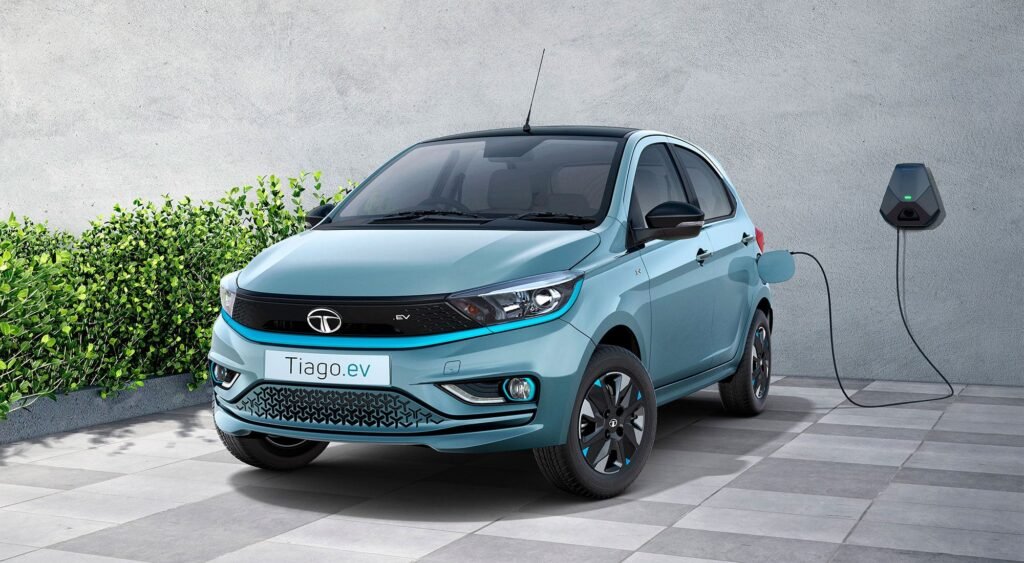
Budget/Entry Electric Car Example
Consider a small city EV priced under ₹10–12 lakh with a realistic range ~200-300km. For example the “Best Electric Cars to Buy in India (2025 Edition)” lists the Tata Tiago EV with battery options 19.2 kWh and 24 kWh, range ~250-315 km. NEODRIFT
Pros: Low cost of entry, fits city driving, home charger sufficient, easier parking, lower maintenance.
Cons: May feel limited for long highway trips, smaller size, fewer premium features or may lack fast-charging.
Fit for you if: Your daily commute is modest, you drive primarily in city/suburbs, you have home charging.
Mid-Range Electric Car Example
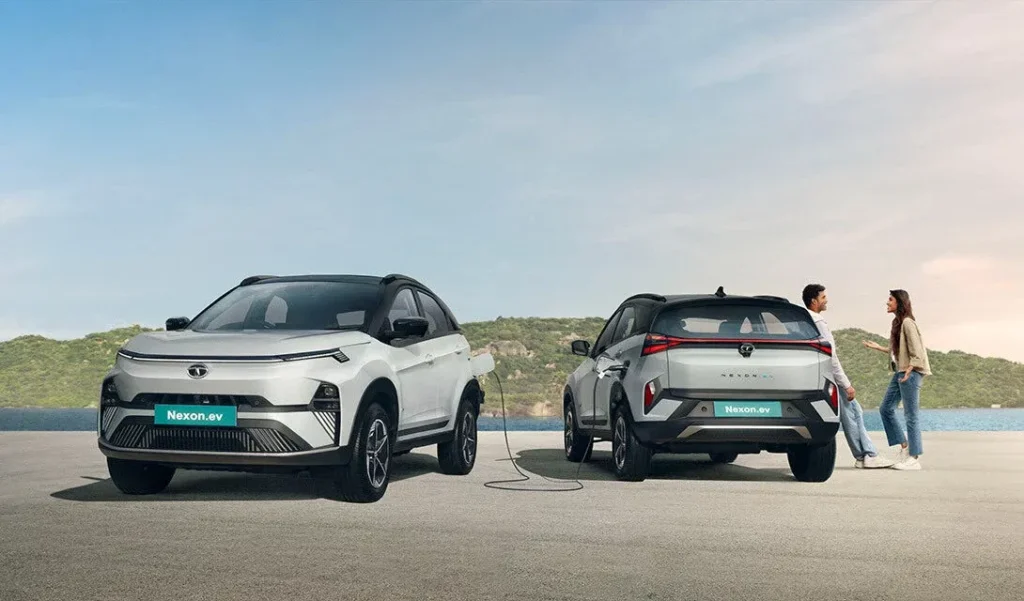
For families or users with more driving needs: the listing includes the Tata Nexon EV with range ~312-453 km depending on variant. NEODRIFT
Pros: Larger size and utility (SUV shape), higher range allows longer drives, more features.
Cons: Higher upfront cost, may need more careful charging planning, battery still bigger cost.
Fit for you if: You travel longer distances occasionally, carry more passengers/luggage, want more comfort, willing to invest more upfront.
Premium Electric Car Example
For premium buyers: e.g., the Hyundai Ioniq 5 is listed with price ~₹46 lakh and range up to ~631 km (in Indian listing). NEODRIFT
Pros: Top-range, premium features, fast charging, future-proof.
Cons: Much higher upfront cost, may be overkill for everyday city commutes, resale and servicing costs may be higher.
Fit for you if: You drive high kilometres, value premium tech, have home and fast-charging infrastructure or plan long trips frequently.
Compare ICE vs EV using a typical ownership cost scenario
Let’s illustrate a simple scenario: You drive 15,000 km/year. You have a petrol car with fuel cost ₹10/litre and an EV with electricity cost equivalent to say ₹4/km (simplified). Over 5 years you might save substantial fuel cost with EV. But you must subtract premium you paid, home charger cost, battery replacement risk. Many studies (such as multi-criteria comparison of EVs vs ICEVs) show that EVs can deliver lower lifecycle cost when usage is sufficient. arXiv
Thus, a key takeaway: The more you drive, the more you will benefit from lower running cost of EV — so match usage to benefit.
Frequently Asked Questions (EV Buying)-Best EV Buying Guide for Indians (2025)
What about range-anxiety?
Range-anxiety — fear of running out of charge before reaching destination/charger — is real. To mitigate: pick a realistic range with buffer (say your daily need + 30-40 km). Map chargers on your routes. Prefer EVs with bigger battery if you do long drives. Keep habit of home charging. Plan journeys. Many modern EVs and apps now show charger availability, speeds.
Is battery replacement expensive?
Battery is one of the most expensive components in an EV. Brands often offer warranty (e.g., 8 years or 1.6 lakh km) on battery. After warranty, replacement cost may vary widely depending on capacity, brand. However battery technology is improving and costs are falling. When buying, ask about battery warranty terms, expected degradation, who bears cost after warranty.
How long will it take to break even vs petrol/diesel car?
Break-even depends on your usage (km per year), fuel vs electricity cost, purchase premium of EV over equivalent ICE, incentives, maintenance cost savings. Many EV-friendly reports show that if you drive sufficiently (say 10,000-15,000 km/year) and have good home charging access, EV becomes more cost-effective over 3-5 years.
What about resale value?
Resale value for EVs is still evolving in India. Key factors: battery health, brand support, service network, overall condition, variant demand. When you buy today you should consider how strong the brand is, how large service/resale network is, and whether battery/future tech may make your car less desirable in few years.
How to evaluate used electric cars?
If buying used EV: check battery health (many manufacturers/service centers provide health summary). Ask about charging history (has it been fast Charged often?). Check warranty remaining. Check earlier service history, any battery replacement. Ensure dealer/brand supports second hand trade-in or independent service. Compare cost of remaining operations vs new car.
Conclusion
Buying an electric car is a significant step — one that reflects not just your desire to save fuel or emissions, but also your lifestyle, daily driving, budget and future thinking. In 2025 India offers a compelling variety of EVs from entry level to premium, making the move realistic for many more consumers.
But this transition demands new questions: Do I have charging access? What range do I really need? What will be my cost-per-km over next 5-8 years? Is the brand and service network ready? Have I considered battery health/resale? The best electric car buying guide reminds us that there is no “one size fits all” — the right car for you will depend on your usage, location, budget, and expectations.
If you are a city commuter with access to home charging, an entry EV might deliver all you need plus big running-cost savings. If you travel long distances or carry family/luggage often, a higher-range mid-SUV EV may make more sense. And if you drive large kilometres or want premium features, the luxury segment is ready. Across all, focus on total cost of ownership, real-world range, charging convenience, and future proofing.