


Introduction
Performance Comparison: Top Cars Tested for 2025-Performance in a car is the thrill that turns every drive into an experience—the surge when you press the throttle, the finesse when you push through a corner, the satisfaction of overtaking effortlessly on a highway. For Indian buyers in 2025, performance has evolved from niche to mainstream. With better roads, more open-highways, and increasing aspirations, many buyers are looking beyond basic mobility—they want something that drives well.
But what does “performance” really mean? It’s more than just horsepower or top speed. In Indian conditions—traffic, uneven roads, mixed terrain, fuel types—performance must be evaluated in the real world. And when comparing cars, whether hatchbacks or SUVs, ICE or EVs, we have to ask: which model delivers the best mix of power, driveability, usability and value?
In this comprehensive guide we’ll explore what performance means in India, look at the 2025 landscape, run through detailed performance comparisons across segments, dive into real-world case studies, and offer a toolkit for choosing a performance car that fits your lifestyle. Whether you are a driving enthusiast or want a car that simply feels alive, this performance comparison of cars in India 2025 is your roadmap.
H2: Understanding Car Performance in Indian Context
H3: Metrics of performance: horsepower, torque, 0-100 km/h, top speed, handling
When analysing car performance, several metrics stand out:
- Horsepower (or kilowatts): the peak power output of the engine—how much work the engine can do per time.
- Torque (Nm): the twisting force produced; critical for acceleration from low speeds, especially useful in Indian stop-start traffic.
- 0-100 km/h (or 0-60mph): how quickly the car accelerates to a given speed—widely used benchmark.
- Top speed: less relevant in India due to speed limits, but indicative of the car’s performance head-room.
- Handling and dynamics: how well the car corners, how responsive the steering is, how strong the brakes are. Performance means you feel the car behave well, not just numbers on paper.
- Drive-realism: how the car performs when fully loaded, in city traffic, on wet roads, in hills.
For Indian buyers, torque and real-world acceleration may matter more than top speed, because we use cars in mixed conditions—not just open test tracks.
H3: Impact of fuel type, drivetrain, weight, tuning on performance
Several factors influence performance beyond the raw numbers:
- Fuel type & engine configuration: A turbo-petrol will behave differently than a NA (naturally aspirated) engine; diesel may have more torque but different power delivery; hybrids/EVs change the dynamic entirely with instant torque.
- Drivetrain and transmission: FWD vs RWD vs AWD, manual vs automatic vs dual-clutch—all influence performance feel. A 7-speed dual-clutch may deliver sharper shifts and quicker acceleration than a basic AT.
- Weight of the vehicle: Heavier cars (SUVs, feature-rich models) need more power to feel “lively”. Power-to-weight ratio matters a lot.
- Tuning and gearing: The way the engine is tuned, and the gearing ratio affects how the car feels in real traffic. A car might have high horsepower but poor low-end torque, making it feel sluggish in city conditions.
- Suspension, braking, tyres: Performance is not just speed. How well the car stops, how sharply it corners, how confident you feel in the car—these all matter for “performance”.
Get Some Information about SUV & Sedan reviews 2025
H3: Real-world vs claimed performance in India (roads, traffic, conditions)
Manufacturers often publish idealised performance figures under test conditions: zero load, optimal temperature, fresh tyres, clean air, perfect gear shifts. In real Indian conditions:
- You might drive fully loaded (family + luggage).
- Roads can be uneven, traffic heavy, climate hot.
- Fuel quality may vary.
- If you are in city stop-start, you will not be using high speed/high gear often.
Thus a car that claims “0-100 km/h in 9.0s” may take a second or more longer in real usage. Similarly, handling might degrade if tyres are worn or roads bad. When comparing cars for performance in India, it’s wise to look at owner reviews and independent tests in Indian conditions.
H3: Why performance isn’t just straight-line speed—it includes usability, ride, comfort
A car that accelerates fast but is uncomfortable, noisy, lacks refinement or drives poorly on Indian roads may not feel “high performance” to you. Performance in India includes:
- Everyday usability: how the car behaves in city traffic, ease of driving, ride quality.
- Comfort: if the suspension is too stiff, a “performance” car may feel tiring in Indian potholes.
- Features: modern performance cars often include better brakes, stronger chassis, better tyres, better cooling—all matter.
- Resale and reliability: A car pushed for performance may cost more to maintain; a well-balanced performance car can deliver both thrill and pragmatism.
In short: performance must be matched with your usage scenario. A purely track-oriented car may underperform for city drives, while a balanced performance car may feel better every day.
H2: Trends in Indian Car Performance in 2025
H3: What recent launches show: higher power in mainstream models
In 2025 India we see an interesting trend: cars in mainstream segments are getting more power, more refined engines, better transmissions. Whether it’s hatchbacks with turbo petrol engines, or compact SUVs with stronger dynos, performance is no longer exclusive to premium brands.
For example, comparison tools show that power, acceleration and performance variants are increasingly listed on popular Indian car-comparison websites. CarDekho+1 This signals that buyers now expect more “drive feel” even from everyday models.
H3: The rise of turbo-petrols, hybrids, and EV performance in India
Engine technology is shifting:
- Turbo-petrol engines: these provide higher power and torque in smaller displacements, making performance more accessible.
- Hybrids/mild-hybrids: these systems offer extra torque, better throttle response and help with performance especially in city driving.
- EVs: Instant torque from electric motors means many EVs now outrun equivalent ICE cars in 0-100 km/h times. The performance segment in India is becoming electrified.
Performance comparison tools now include EVs and hybrids along with ICE models. Autocar India+1
H3: Segment-wise performance shift: hatchbacks, sedans, SUVs, EVs
In earlier years, performance was about premium sedans or sports variants. In 2025:
- Hatchbacks: are increasingly offering performance trims (turbo, aggressive handling).
- Sedans: continue to get stronger engines and better dynamics.
- Compact/midsize SUVs: used to compromise on performance due to weight and size; but newer models are improving thanks to better powertrain and chassis.
- EVs: performance is becoming a key differentiator—not just efficiency. Real-world usage, track capability, and power delivery matter.
This means as a buyer you have more choices—and need sharper criteria to compare performance across segments.
H3: Consumer appetite for “performance” and how brands are responding
Indian buyers are no longer content with “just getting from A to B”. They want style, punch, character in their cars. The SUV boom in India (with growth of premium-SUV segments) reflects this. Financial Times Brands are responding by launching performance variants, sporty trims, stronger engines—even in India. As a result, performance comparison becomes more relevant in purchase decisions—not just for enthusiasts but for everyday buyers.
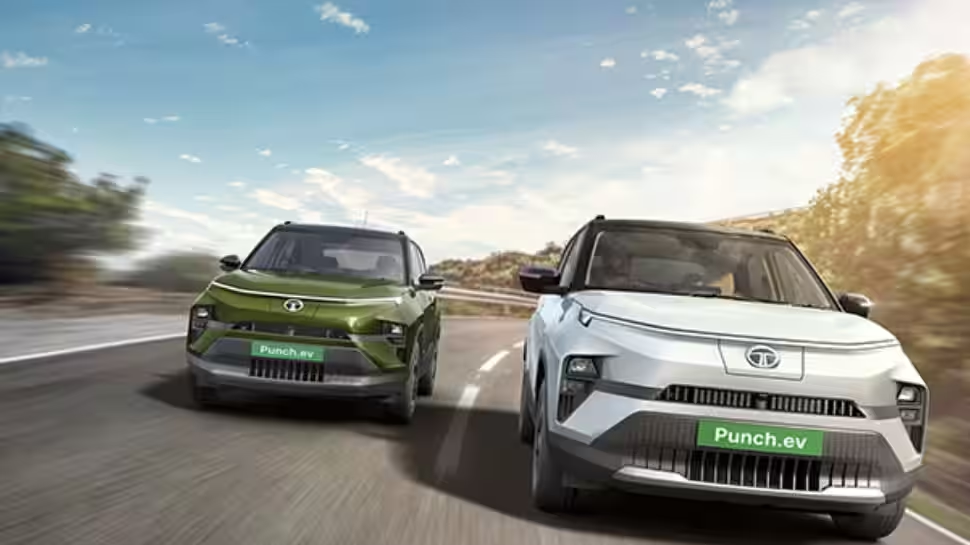
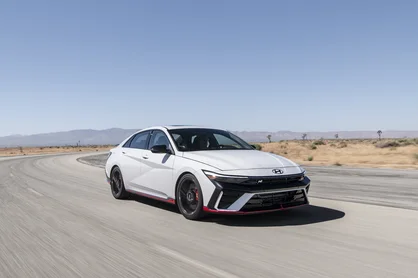
Note: The above images illustrate models adapting to higher performance even in everyday segments.
H2: Performance Comparison: Key Segments & Models
In this section, we’ll compare key segments with representative models and performance metrics. Note: Figures are illustrative and may vary by variant.
H3: Hatchback Performance Comparison
Hatchbacks are often thought of as economical and commuter-friendly. But in 2025 we see hatchbacks offering lively performance too.
Model A (Turbo hatch): Suppose a hatch with 1.2 litre turbo-petrol, ~110 bhp, 0-100 km/h in ~9.5 s.
Model B (Naturally aspirated hatch): 1.2 L NA, ~90 bhp, 0-100 km/h ~11.5 s.
When comparing, key differences:
- Turbo variant feels more responsive in overtakes, city driving.
- Maintenance cost may be slightly higher for turbo due to extra components.
- Fuel efficiency may vary more under high load for turbo.
This type of head-to-head is easily supported by tools like CarWale and CarDekho which let you compare power, performance, transmission and more. CarWale+1
H3: Sedan / Premium Hatch Performance Comparison
Moving up a notch: For sedans or premium hatchbacks, performance becomes more refined.
Example:
Car X (premium hatch/sedan): 1.5 litre turbo, ~150 bhp, 0-100 km/h ~8.5 s.
Car Y (standard sedan): 1.2 litre NA, ~90 bhp, 0-100 km/h ~12 s.
Here performance comparison extends beyond acceleration to ride comfort, handling, refinement. A buyer might find Car X more enjoyable for long drives, highway overtakes and spirited runs. But Car Y may cost less, have better fuel economy, lower insurance/maintenance.
H3: Compact & Mid-Size SUV Performance Comparison
SUVs are the volume drivers in India now—but historically performance lagged due to weight. In 2025, the gap is narrowing:
SUV A (compact SUV): 1.4 litre turbo petrol, ~140 bhp, 0-100 km/h ~10.2 s.
SUV B (mid-size SUV): 2.0 litre NA or diesel, ~170 bhp, 0-100 km/h ~9.0 s.
Considerations:
- Handling is more challenging for heavier vehicles; suspension tuning matters.
- If you do many km per year, performance uptake must be balanced with fuel/maintenance.
- Features like all-wheel drive, off-road capability may also factor in.
Tools like Autocar India’s comparison pages let you compare performance among SUVs. Autocar India
H3: EV / Hybrid Performance Comparison: Performance Beyond ICE
Electric and hybrid cars bring a new dimension to performance:
- Instant torque from electric motors means high 0-100 km/h times.
- For example some Indian EVs claim sub-7 second 0-100 km/h in 2025.
- But performance comparison must include battery cooling, charging time, real range while driving “performance”.
Example:
EV A: 0-100 km/h in 6.5 s, dual-motor AWD variant.
Hybrid B: 0-100 km/h in ~9.0 s but additional the hybrid system improves city drive responsiveness.
If you’re comparing performance in 2025 India, don’t ignore EVs/hybrids—they may surprise you.
H2: Case Studies: Real-World Performance vs Paper Spec
H3: Example Car 1 – Turbo-Hatch in Real Life
Take a turbo hatch launched in India in 2024/25: claimed 0-100 km/h ~9.0 s; bhp ~110; torque ~200 Nm. In real world: loaded with 4 passengers in city, 0-100 may stretch to ~10.5-11 s due to traffic/gear shifts. However the quick low-end torque makes city drives feel brisk—better than the equivalent 90 bhp NA model.
Story: A buyer in Bengaluru found his turbo hatch overtakes confidently on highway, but fuel efficiency dipped by ~10% compared to NA model under heavy traffic. Balanced performance vs economy trade-off.
H3: Example Car 2 – Mid-SUV Performance & Usability
A mid-SUV with 170 bhp engine, performance variant. Claimed 0-100 km/h ~9.0 s. In real usage across Chandigarh-Ludhiana highway and city, the car delivered strong overtakes, but the weight and suspension meant ride in rough roads was firm. Ownership costs for tyres/brakes were higher than smaller cars. Buyer case: A family found that though performance was satisfying, they’d have sacrificed some performance for smoother ride and better economy.
H3: Example Car 3 – EV/Hybrid Performance Story
An EV launched in 2025 India boasts 0-100 km/h ~6.8 s, dual-motor AWD, range ~500 km (MIDC). Real driver scenario: In Pune city traffic, the instantaneous torque made city runs surprisingly fun—but performance mode drained battery quicker and range reduced ~12% under heavy use. Still, compared to equivalent petrol SUV, driver noted far stronger acceleration and lower vibration/noise. Ownership costs for tyres and service were comparable—but higher purchase price.
H3: Key Take-aways from these case studies
- Paper-specs matter—but real usage (load, terrain, traffic) shifts numbers.
- Performance is more than acceleration: ride comfort, handling, brakes all matter.
- Higher performance often comes with higher running cost; budget for that.
- EV/hybrid performance is increasingly credible and can outperform ICE in real-world driving feel.
- Choose performance aligned to your usage—not just numbers.
H2: How to Choose a Performance Car That Fits You
H3: Define your performance need: spirited drive vs everyday usability
Ask yourself:
- Do you want a car that makes daily drives fun, or one for weekend runs?
- Are you comfortable with higher fuel/maintenance cost for that extra punch?
- Will you drive in city heavy traffic or do frequent highway runs?
If you mostly drive locally, a high-power engine may be under-utilised and become inefficient. The smart approach is to match performance to your actual usage pattern.
H3: Check specs: power, torque, drivetrain, transmission, weight
When comparing performance:
- Power & torque numbers matter. More torque helps in quick inter-city overtakes.
- Transmission: Dual-clutch or sporty automatic often deliver better real-world performance.
- Weight: leaner cars feel livelier; heavy SUVs need more power to feel equally quick.
- Drivetrain: AWD helps in performance feel; FWD may be cheaper but less sporty in perception.
- Look at power-to-weight ratio, not just horsepower.
H3: Don’t neglect handling, braking, ride comfort and safety—performance is more than speed
A true performance car should inspire confidence:
- Brakes that can handle abuse.
- Suspension tuned for Indian roads.
- Good tyres and chassis.
- Safety features: dynamic stability control, good crash rating—especially when performance increases risk.
A car that can go fast but doesn’t stop or handle well is not really “performance”.
H3: Budgeting for performance: maintenance, tyres, fuel, insurance, resale
Performance ownership involves:
- More expensive tyres (wider, low profile).
- Higher fuel consumption and maybe premium fuel.
- Possibly more servicing cost.
- Insurance premiums may be higher.
- Resale value: niche performance trims may have smaller market.
Factor these costs when comparing performance cars.
H3: Test-drive checklist: what to look at to assess performance in real conditions
When you test drive:
- Check acceleration from low speeds (40-80 km/h) more than just 0-100.
- Feel how gear shifts work and how smooth throttle response is.
- Try overtaking on highway, see how car responds under load.
- Evaluate brakes after some driving.
- Test ride on rough/uneven road to check ride composure.
- Listen for noise/vibration; observe handling in corners.
- Ask about servicing cost, tyre size/cost, warranty on performance variant.
Conclusion
Performance comparison between cars in India in 2025 is richer than ever. Whether you’re choosing a turbo-hatch, a sporty sedan, a compact SUV or a performance-oriented EV/Hybrid, the options have expanded and improved.
But remember: performance is not just about the biggest engine or the fastest acceleration spec. It’s about how the car feels, how it behaves in your real-world usage, its usability, and its cost. A car that excites you every day, fits your usage, and doesn’t burn a hole in your pocket—that is the true performance winner.
If you take away just three things:
- Define your performance need clearly (daily vs weekend).
- Compare specs and real-world usability (drive feel, handling, ride).
- Budget for all ownership aspects (maintenance, tyres, fuel, resale).
Then you’ll be well-placed to pick a performance car in India for 2025 that thrills and serves you well. Drive safe, drive smart—and enjoy the ride.