


Introduction
Why the Indian market is ripe for future mobility and concept-car innovation
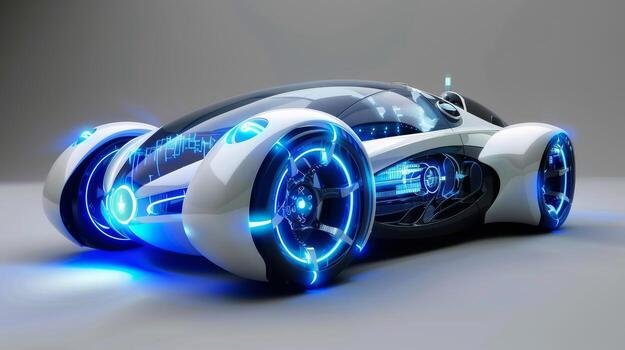
Concept Cars & Future Tech in India-India’s automotive landscape is on the cusp of transformation. With millions of vehicles sold every year, a rapidly growing middle class, and strong governmental push for electrification and smart mobility, the conditions are uniquely favourable for new-mobility concepts to make waves. The familiar sight of hatchbacks and sedans is gradually becoming supplemented by electric vehicles, connected cars, ride-sharing services and concept vehicles promising a glimpse of what tomorrow looks like.
For Indian consumers — whether in major cities like Delhi, Mumbai, Bangalore or up-and-coming towns like Mohali, Chandigarh, Pune or Jaipur — the question is no longer simply “Which car should I buy?” but increasingly “What will my mobility look like in five years?”. Concept cars and future-tech demonstrations capture this future, and by studying them, we can deduce both the promise and the path ahead.
Defining “concept cars” and “future tech” — what we mean in the Indian context
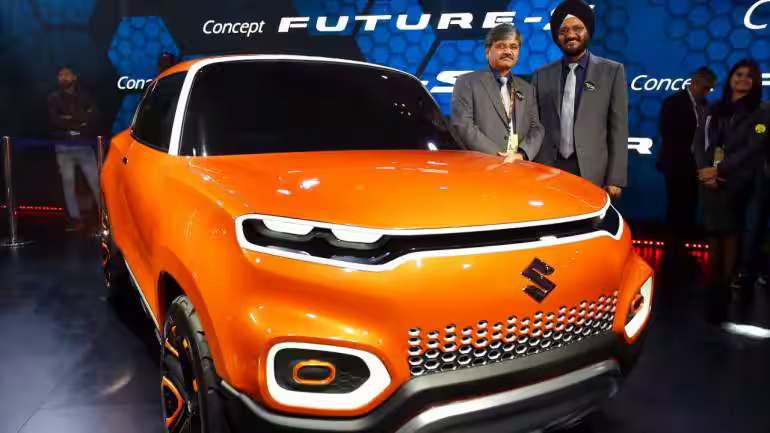
A “concept car” is, broadly speaking, a prototype or design study that showcases new styling, technologies, materials or mobility ideas. It may or may not go into production, but it signals what the automaker (and sometimes the industry) is thinking about for the future. According to one industry insight, concept vehicles “are a way to… trial new ideas in a public forum and push the boundaries of what is believed to be possible.” Jameel Motors
“Future tech” in our context refers to the technologies that underpin mobility’s next chapter: electrification (battery & electric powertrains), connectivity (vehicle-to-everything, smart infrastructure), autonomy (driver assist to self-driving), shared mobility models, new materials/designs and the ecosystem around them (charging, software, data).
In the Indian context, these ideas have additional layers: localisation (cost-sensitive manufacturing in India), suitability to Indian roads and conditions (uneven roads, mixed traffic, weather, rural-urban divide), regulatory environment (safety, emissions standards, incentives) and consumer affordability. Therefore, when we talk about “concept cars and future tech in India”, we’re looking at how global mobility innovation is being translated, adapted or re-imagined for the Indian market.
Get Some Information about SUV & Sedan reviews 2025
The Global Landscape of Concept Cars & Mobility Technology
What global automakers are doing (electric, autonomous, connected)
To understand what is possible in India, it helps to look outward. Internationally, automakers are unveiling concept cars that push beyond conventional boundaries. For example, the BMW Vision Neue Klasse — revealed in 2023 — previews next-generation electric architecture, minimalist interiors, seamless connectivity and advanced EV powertrains. WikipediaLikewise, the emphasis has moved from simply making “a future car” to embedding layered technologies: autonomous driving sensors, steer-by-wire systems, immersive displays, sustainable materials and connected services.
Concepts are increasingly electric, increasingly autonomous and increasingly software-centric. From giant curved displays to seats that adapt dynamically, from bidirectional charging to vehicle-to‐grid integration, concept cars are testing what mobility could become in a world where cars are not just machines but connected nodes in a network.
How those global trends translate (or will translate) into India
The challenge for India is: how do these global innovations map into an environment that is cost-sensitive, infrastructure-diverse, regulatory evolving and consumer-heterogeneous? Global concept-car features like lidar arrays, steer-by-wire or solar-roof charging are often expensive and complex — their viability in India depends on cost, localisation, supporting infrastructure and consumer acceptance.
Nevertheless, many of these technologies are filtering — either directly or adapted-for-India. For example:
- Electric powertrains and battery technology (once exclusive to high-end imports) are now appearing in Indian cars with more aggressive pricing.
- Enhanced connectivity (over-the-air updates, digital cockpits) is progressively entering mainstream Indian models.
- Autonomous features (ADAs, driver-assistance) though not full self-driving yet, are beginning to appear in India.
- Shared mobility / ride-hailing / micro-mobility models are already robust in India and will increasingly adopt future tech.
Hence, the global concept-car ecosystem provides both the order-book of future possibilities and inspiration for how India will navigate its own mobility evolution.
India’s Concept Car Ecosystem-Concept Cars & Future Tech in India
Indian automakers and their concept ideas — case studies
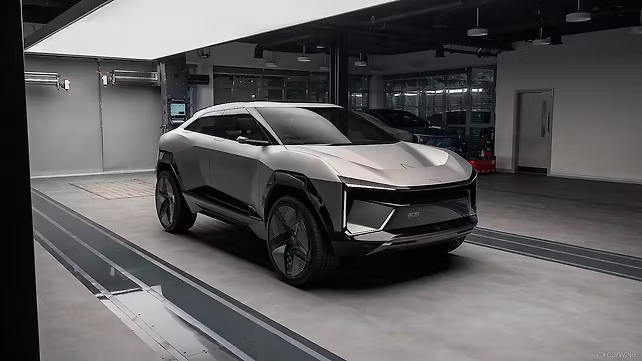
Indian automakers are not waiting on the sidelines. For example, the Tata Avinya — a futuristic electric concept by Tata Motors — demonstrates India’s ambition in premium EV space. Tata Motors EV Also, the exhibition of futuristic models at India’s major auto-shows (such as the Bharat Mobility Global Expo 2025, formerly Auto Expo) showcases how concept cars are being used to preview what’s coming. ZigWheels.com+1
In short: Indian automakers are using concept cars to signal their future roadmap, capture consumer interest, and test technology, design and manufacturing readiness in an Indian context.
Startups, tech firms and future-mobility innovators in India
Beyond the OEMs, Indian mobility innovation is being driven by startups, tech firms and supplier ecosystems. While not all are “concept car” creators, many build the technologies that feed into future mobility — software platforms, battery technology, autonomous sensors, ride-hailing platforms, shared-mobility models, connected infrastructure. For instance, India has a vibrant ecosystem of automotive tech startups. LeadSquared
This diversity (OEMs + startups) is essential for building a future mobility ecosystem in India, especially for cost-effective localisation, adaptation to Indian conditions, and scaling.
Role of government policy, localisation, “Make in India” and EV push
For concept cars and future tech in India, the policy environment matters greatly. The push for electrification (through subsidies, incentives), localisation (through production-linked incentives, import duty policies), and infrastructure (charging networks, smart-city initiatives) sets the stage. In essence, the government is providing the scaffolding for future mobility innovation.
Indian automakers design concept vehicles not just for design or image, but with real-world Indian factors in mind: cost, ease of service, scalability across urban/ rural India, compatibility with local regulation, suitability for Indian roads. That means concept cars in India often incorporate features tailored for Indian conditions (e.g., robust suspension, cost-efficient tech, ruggedness) even while showcasing future tech.
Key Technologies Shaping Future Mobility in India
Electrification & battery technology (EVs, hybrids, alternative fuels)
Electric mobility is a central pillar of future mobility in India. Concept cars almost always feature electric power-trains, often with large battery packs, fast charging, long range, and innovative packaging. As car makers shift from ICE (internal combustion engine) to EV, the Indian market must adapt accordingly.
Battery technology improvements — energy density, cost reductions, solid-state batteries, modular packs — are game-changers. When concept cars show 500 km+ ranges, ultra-fast charging (30 min or less), bidirectional charging, recycling of battery cells, all this signals what may come to India. For Indian consumers this matters: running cost, range anxiety, total cost of ownership.
For example, the concept of “retro-styled SUV meets EV” is gaining ground in India — showcased by models at the Bharat Mobility Global Expo 2025. ZigWheels.com+1
Autonomy and connectivity (ADAS, V2X, driver-assist, full self-driving)
Connectivity and autonomy are the next frontier. Concept cars often demonstrate advanced driver-assistance systems (ADAS), vehicle-to-vehicle (V2V) and vehicle-to-infrastructure (V2X) communications, steer-by-wire, autonomous drive modes, over-the-air software updates, connected-car ecosystems. A useful academic work, “Infrastructure Enabled Autonomy: A Distributed Intelligence Architecture for Autonomous Vehicles”, outlines how infrastructure (edge-computing, sensors on roads) can complement vehicles’ autonomous capabilities. arXiv
In India, while full self-driving remains distant due to regulation and infrastructure, several concepts and pilot projects (autonomous shuttles, connected vehicles in smart cities) are underway. As concept cars showcase these ideas, they also hint at the infrastructure and regulatory adaptation needed.
Shared mobility, on-demand, micro-mobility & new business models
Another key trend is the shift from “owning a car” to “accessing mobility”. Concept vehicles increasingly emphasise shared mobility, flexible ownership models, micro-mobility (electric scooters, last-mile vehicles) and integration with ride-hailing or subscription services. For India — where urban congestion, pollution, affordability are major constraints — these models are highly relevant.
Concept cars may demonstrate modular designs (interior configurable for car-sharing), digital services (app integration, data-driven fleets), connectivity to smart-city infrastructure. This future-tech ecosystem is as important as the vehicle itself.
Sustainable design, materials, interiors & user-experience (UX)
Beyond powertrain and connectivity, concept cars increasingly highlight sustainability — materials made from recycled plastic, biomaterials, vegan interiors, minimal-waste manufacturing, modular components. The user experience (UX) is rethought: digital dashboards, floating infotainment, augmented-reality heads-up displays, personalisation, seamless connectivity with smartphones and home.
In India, adapting these design sensibilities must also address cost sensitivity, durability (for diverse road/terrain conditions) and serviceability. A concept car may show premium materials or unusual layouts, but the production version must be manufacturable at scale for India.
Select Concept Cars & Future Tech Projects in India
Tata Avinya — premium EV concept from India’s Tata
The Tata Avinya concept by Tata Motors showcases a premium electric-vehicle vision built in India. Tata Motors EV It exemplifies how Indian automakers are not just following global trends but aiming to lead in future tech. The Avinya concept offers bold design, advanced powertrain architecture and signals a shift in Tata’s positioning towards luxury/tech-forward EVs.
Tata Sierra EV (Concept) / near-production example at India’s expos
At the Bharat Mobility Global Expo 2025, one of the top concept models listed is the Tata Sierra EV concept (and near-production version) — blending nostalgia with future tech. ZigWheels.com This concept bridges consumer appeal (retro branding) with modern EV and connected-car technology, giving insights into how future mainstream models might look in India.
Other global concept cars being shown in India (for benchmarking)
While the global automakers’ concepts may not launch in India immediately, they serve as benchmarks and inspiration for Indian mobility innovation. Even if not all features make it to Indian production cars, they set consumer expectation and industry roadmap. For example, advanced materials, augmented-reality displays and autonomous assist systems shown in global concept cars will gradually filter into Indian vehicles.
Future tech projects (autonomous vehicle pilots, connectivity demos, battery R&D)
Besides concept cars, India is also seeing future-tech projects in mobility. These include collaborations between industry and academia, autonomous mobility pilots in smart-city environments, battery-technology research, vehicle-to-infrastructure communication trials. While many are still proof-of-concept, they matter for future production models and for India’s readiness to adopt concept-car tech.
What It Means for Indian Consumers, Industry & Infrastructure
How concept technology will (or might) filter into production cars in India
For consumers, the concept-car language is more than showpieces — it signals future features that may enter mainstream models. For example:
- Premium infotainment/connected-car features once exclusive to luxury models may become accessible in mainstream Indian cars.
- EVs may gain longer range, faster charging, more affordable pricing as volumes rise and battery costs fall.
- Driver-assist and safety features may trickle down from concept vehicles to mass market.
- Ownership models may diversify: subscription, shared fleets, micro-mobility.
For industry, concept cars act as technology incubators. They allow automakers to test new materials, manufacturing techniques, powertrains, digital services. The transition from concept to production is neither instant nor guaranteed, but it helps map future direction.
Infrastructure readiness: charging, smart roads, regulations, standards
Even the best concept car features cannot succeed without infrastructure. In India:
- Charging infrastructure (public fast chargers, home charging, battery-swap) needs fast expansion.
- Grid readiness: demand, stability, renewable integration matter.
- Smart roads and connectivity (5G, edge computing, V2X) are required to support features like autonomous driving or connected car services.
- Regulation: safety standards for ADAS/autonomy, data privacy, cyber-security, battery recycling, end-of-life disposal.
- Manufacturing / supply-chain localisation: to make concept tech cost-effective in India, components must be locally made and scalable.
Industry implications: OEMs, suppliers, startups, jobs
For the Indian automotive ecosystem:
- OEMs must plan not just for ICE transitions but for full mobility ecosystem (software, services, connectivity).
- Suppliers are shifting from mechanical parts to electronics, sensors, software modules.
- Startups have large opportunity in future mobility: battery tech, mobility-services, connected-car platforms.
- Jobs will evolve: fewer purely mechanical jobs, more software, data analytics, UX design, systems engineering.
- India could potentially leapfrog in certain niches (e.g., low-cost EVs, software-defined vehicles) if it leverages its digital-services advantage.
Consumer implications: affordability, features, ownership models
For Indian consumers the question is how much of the concept-car future will be accessible (affordable) rather than luxury. Key consumer insights:
- Will future tech raise car prices significantly or will cost-reductions offset this?
- Will buyers accept new ownership models (subscription, shared) rather than outright purchase?
- Will service and resale value hold up for vehicles with advanced tech?
- In cities and rural areas alike, will infrastructure (charging, internet connectivity) support advanced vehicles reliably?
Understanding concept cars helps consumers anticipate what to expect (but also manage expectations) when they buy in 2025 or 2030.
Challenges & Roadblocks in India’s Future Mobility Journey
Cost, localisation, scale and supply-chain issues
Advanced technologies cost more — sensors, batteries, software, connectivity parts — and building them in India at scale is a challenge. Localisation of high-tech components is still catching up; supply-chain robustness varied across India. While concept cars often cost “what if money is no object”, production cars in India must be cost-effective, which limits how quickly cutting-edge features arrive.
Regulation, safety, cybersecurity and data privacy
Autonomous driving and connected systems pose regulatory and safety challenges. In India, regulation around driver-less vehicles, V2X, data sharing, cybersecurity is still evolving. Consumer trust is critical — one failure in an advanced vehicle could slow adoption. Ensuring vehicles with concept-car tech meet Indian safety standards, are robust under Indian conditions (traffic chaos, mixed vehicle types, varied roads) is non-trivial.
Infrastructure lag (charging, grid, roads, connectivity)
Even with concept cars ready, if infrastructure lags it can block adoption. India has begun building EV charging networks but there remain gaps — in rural areas, in smaller towns, in standardisation. Smart infrastructure (5G, edge-computing, V2X) is still uneven. Road conditions, mixed traffic, and existing regulatory/legal frameworks also limit full deployment of future-tech vehicles.
Customer acceptance, resale value, rural-urban divide
Many concept features are novel and may carry premium price. Indian buyers are cost-sensitive, and value for money is a key driver. Some advanced features may not yet align with Indian consumer needs or budgets. Resale value of vehicles that include early tech may be uncertain. Additionally, India’s rural/urban divide means a vehicle designed for urban future-mobility may be less suitable in smaller towns or rural roads.
Roadmap to 2030 and Beyond
Key milestones to watch in Indian mobility (2025-2030)
From the concept-car and future-tech perspective, key milestones for India include:
- 2025–26: More mainstream EV launches in India with advanced features (500 km+ range, sub-30 min fast charging)
- Deployment of ADAS features (level 2) in Indian cars as standard
- Expansion of public charging infrastructure and possible battery-swap networks
- Early autonomous mobility pilots in Indian cities or campuses
- Software-defined vehicles with over-the-air updates, connected services becoming norm
- By 2030: significant share of new-car sales in India being electric; shared mobility models gaining mass adoption; concept-car features like modular interiors or vehicle-to-grid integration trickling down
What concept-to-production-transition might look like in India
Concept cars provide vision. The production transition in India will follow these paths:
- Design elements (styling cues, interiors) get into next-gen production vehicles within 2-4 years
- Technology features (connectivity, ADAS) appear first in premium models, then down-trickle into mass-market models
- Price falls as volumes scale, localisation improves, battery costs reduce
- Infrastructure catches up, enabling higher-tech vehicles to function reliably
- Business models adapt: subscription, ride-sharing, battery-as-service, digital services
How consumers can stay ahead (buyers, early adopters, enthusiasts)
Car buyers in India who want to benefit from future mobility can do several things:
- Watch concept reveals (at expos, online) to understand upcoming features and roadmap
- Prioritise features that matter (range, connected services, safety) not just aesthetics
- Consider total cost of ownership: running cost, resale value, service network, infrastructure support
- Choose vehicles with upgradeable software/connected services
- Be aware of infrastructure readiness in your region (charging stations, service centres)
- If you want to adopt early, be prepared for a slightly higher cost or waiting period for new-tech models
Conclusion
Recap of major themes: concept cars, future tech, India’s opportunity
Concept cars and future-tech mobility are not just “far-out ideas for luxury vehicles” — they are blueprints for the next decade of mobility globally, and particularly in India. The Indian market, with its scale, diversity and growth trajectory, stands to gain enormously from these innovations: electric vehicles that are affordable, connected features that enhance safety and convenience, new ownership models that make mobility more accessible, and an ecosystem of industry, startups, infrastructure and regulation that can leapfrog older models of car ownership.
However, the path is not without hurdles: cost, infrastructure, regulation, consumer readiness and localisation remain key. Not every feature in a concept car will arrive in India immediately, but by watching concept statistics and trends one can anticipate what’s coming and make better decisions — whether you are a buyer, enthusiast, industry professional or policymaker.
Final thoughts: how to keep yourself informed & benefit
If you are in the market for a car in India in the coming years — or simply curious about how mobility will evolve — here are some practical takeaways:
- Follow concept-car reveals and auto-expo reports (for example the Bharat Mobility Global Expo).
- Look at Indian automakers’ road-maps: what concept vehicles they are showcasing.
- Monitor infrastructure development in your city/region (charging stations, connected-car services).
- When buying, factor in future-proofing: software updates, connected car features, EV readiness.
- Consider whether you want to be an early adopter (and pay a premium/wait) or wait until mass-market models adopt the features.