


Introduction
Why now is a hot moment for upcoming car launches in India
Upcoming Car Reviews in India-If you’re in the market for a new car in India within the next 12-24 months, you are in for a very interesting time. The Indian auto industry is experiencing one of its busiest windows for upcoming car launches, driven by several simultaneous forces: the rapid push towards electrification, the increasing popularity of SUVs and crossover vehicles, new safety and regulatory standards, evolving consumer expectations around features and connectivity, and of course the localisation push by global manufacturers aiming at India’s growth potential.
For instance, listings of upcoming cars in India show dozens of models slated for 2025-26 — from budget hatchbacks to pure electric SUVs. One resource suggests “the upcoming cars coming in India 2025/2026 include … around 70 upcoming cars” across multiple segments.
As a prospective buyer, this means that you may have more choice than ever — but also more complexity. Should you wait for one of the listed upcoming models, or pick a current model with discounts? Will the upcoming model live up to its promise on features, price, waiting time, and service network? How will resale value shift? These are questions that matter.
How to read an “upcoming car review” — what we’re focusing on
When dealing with upcoming car reviews, you must understand that you’re one step removed from the full on-road reality. The vehicle may not yet be on sale, the full features may not be final, and waiting lists or launch promos may affect your actual experience. So a robust upcoming-car review tries to forecast and evaluate based on what is known and what is being promised — and then assess the risks, trade-offs and timing strategies.
In this blog, we will:
- Map the market context that’s driving upcoming launches;
- Lay down a methodology for how to assess upcoming models;
- Walk through the most-anticipated upcoming car reviews in India by segment;
- Provide a deep-dive checklist of key review metrics you should use;
- Offer a buying strategy for how to approach upcoming cars;
- Flag risks and watch-points you should not overlook;
- And conclude with what these launches mean for the future of car ownership in India.
By the end of this article, you should be better equipped to decide whether to wait for a launch, what to look for in a model, and how to negotiate timing, booking and value.
The Market Context for Upcoming Cars in India
What’s driving the surge of launches — EV push, SUVs, regulatory changes
India’s automotive market is undergoing rapid evolution. Although the bulk of sales still come from internal-combustion models, there is a clear shift underway. Electric vehicles (EVs) are gaining traction, SUVs continue to dominate buyer preference, and regulatory pressures (safety, emissions) are rising. Manufacturers are therefore planning multiple new models to capture future demand.
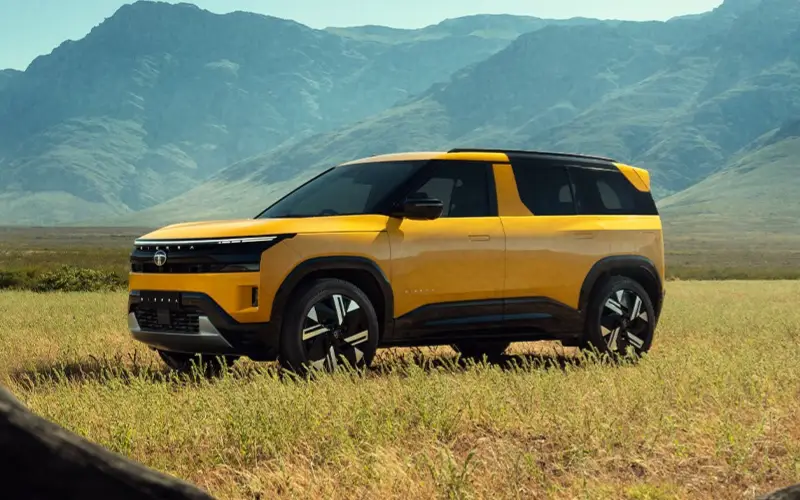
For example, upcoming-car lists show models like the Mahindra XEV 9S electric SUV scheduled for November 2025, or the Tata Sierra expected around late 2025/early 2026.
SUVs are particularly key. The appeal of roomy interiors, commanding driving position and higher status means many upcoming launches target the SUV space—even electrified versions. On the policy side, Indian OEMs face rising expectations for safety (e.g., multiple airbags, ADAS features) and localisation/incentives for EVs and hybrids.
Together these factors create a potent environment: manufacturers want to refresh their line-ups, entice buyers waiting to buy, and capture emerging trends (EV, hybrids, connected cars) within India’s price-sensitive market. For you as a buyer, this means more upcoming choices — and more decisions.
How consumer expectations are shifting — features, safety, connectivity
In recent years Indian car buyers have shifted from the mindset of “basic transport” to “transport plus features/experience”. Buyers now expect: large infotainment screens, smartphone connectivity, advanced safety features, multiple airbags, sometimes semi-autonomous features, better materials, more comfort. Similarly, EV buyers expect longer driving range, fast charging, connected features.
This rise in expectation affects upcoming models: they cannot just bring a facelift and call it new—they must deliver tangible improvements. Upcoming-car reviews must therefore evaluate how well these models move the value-chain forward. Will the upcoming model offer more features than current peers? Will it provide better value? Will waiting deliver something meaningfully better?
Overview of the key segments making news: budget hatchbacks, compact SUVs, EVs/Hybrids, premium models
Let’s quickly map out the segments in which upcoming cars are being highlighted:
- Budget Hatchbacks & Compact Cars: For example, the upcoming version of popular budget/compact models that aim to offer more features at competitive pricing.
- Compact & Mid-Size SUVs: This is arguably the largest battleground. Upcoming cars like Tata Sierra, Renault New Duster, etc. target strong volume, strong growth.
- EVs & Hybrids: Upcoming electric models (EVs) are especially in focus, as India tries to ramp up EV adoption. The Mahindra XEV 9S (electric SUV) is a major example.
- Premium & Performance Models: Though lower in volume, upcoming premium cars attract media, enthusiasts and reflect brand positioning. These include imported launches or high-end versions of domestic models.
By mapping upcoming cars segment-wise, you can see where your interest lies (budget vs SUV vs EV vs premium), and tailor waiting/booking strategies accordingly.
Methodology for Reviewing Upcoming Cars/Upcoming Car Reviews in India
What we look at: specs, design, value, wait time, competition
When assessing upcoming cars in India, here’s a structured methodology to ensure you are comparing apples to apples:
- Specifications & Powertrain: What is being promised (engine size, hybrid/EV, battery, range, performance).
- Design & Interior: What is new in design, ergonomics, comfort, materials, features.
- Features & Technology: Infotainment, connectivity, ADAS/safety, digital cockpit, over-the-air updates.
- Value for Money: Expected ex-showroom price, on-road cost (in your city), variant mix, competition.
- Waiting & Practicality: When will it launch? What is the expected waiting period? What is the dealership/service network? Localisation of parts/maintenance.
- Resale & Long-Term Ownership: How likely is it to hold value? Are there risks (first generation, new tech)?
- Competition: How does the upcoming car compare with current rivals and upcoming rivals?
- Trade-off analysis: What do you give up vs what you gain by waiting (or by buying now instead)?
Challenges in reviewing unreleased cars: rumors, expected specs, launch delays
A caveat: any review of an upcoming model must factor in uncertainty. The manufacturer may change specs, pricing may vary, launch may slip, or waiting-period may be unpredictable. Some features may be “on paper” only at launch, with real-world experience lagging. Therefore, while upcoming-car reviews provide guidance, they should not be treated as definitive. Being aware of risk is key.
The importance of “what will it bring to India” — localisation, pricing, service network
In India, an upcoming model’s India-specific features matter a lot: local manufacturing (impact on price), availability of service/parts, variant options appropriate for Indian roads, driving conditions, state-by-state tax and registration variability. A global model may get “watered down” for India or delayed. Thus, part of the review must ask: “How India-ready is this upcoming model?”
Top Upcoming Car Reviews in India – Segment by Segment
Here we profile some of the most-anticipated upcoming cars in India by segment, highlight key known data, and point out what to watch in reviews.
Budget Hatchbacks & Compact Cars
In the cost-sensitive Indian market, even upcoming cars in the budget/compact segment attract attention. According to listings, models such as the forthcoming version of the Maruti Baleno (2026) are expected.
In these segments, buyers increasingly expect features (connectivity, safety, better build) even at lower price points. Upcoming-car reviews here will ask: can the model deliver more features without raising price substantially? Will waiting pay off? Are the current models heavily discounted making buying now viable?
Compact & Mid-Size SUVs
This is the biggest battleground. India’s SUV craze shows no signs of slowing. Upcoming models such as the Tata Sierra (expected in late 2025) or the Renault New Duster (2026) are generating buzz. CarWale+1
For example: the Tata Sierra is expected to hit around ₹12.50-18.05 lakh price range per one listing. Reviewers will ask: how much has it improved over previous generation? Will it offer better space/features/powertrain? Will the pricing justify the upgrade? Will waiting for it be better than buying a current SUV model at discount?
Electric & Hybrid Cars
Perhaps the most dynamic segment for upcoming cars — EVs and Hybrids are gaining traction. One recent news item: Mahindra’s upcoming XEV 9S electric SUV is confirmed for a November 2025 debut. The Times of India
In upcoming-car reviews of EVs/hybrids, key questions include: real-world range vs claimed, charging infrastructure readiness, battery warranty/resale value, total cost of ownership compared to ICE, availability of variants, and waiting period. Because EV launches in India remain nascent, buyer risks are higher — making careful review more critical.
Premium & Performance Launches
Though not mass-market, upcoming premium cars matter for market perception and for buyers of higher segments. Even global brands sending “India launches” or “feature-rich variants” create interest. Upcoming-car reviews in this bracket will look at luxury/brand value, imported vs local manufacturing, features relative to price, and exclusivity vs practicality.
Wild-Card/Conceptish Launches
Sometimes the upcoming model is niche or imported, or a global model crossing-over to India. For example, unusual upcoming models or high-performance EVs. These wild-cards can change the market or serve as halo models. Reviewers must treat them as higher-risk/higher-reward.
Deep Dive Reviews – What to Watch For Each Model
When we review each upcoming car (or if you do your own review), here are key metrics and questions to ask under each review-metric heading.
Review metric 1 — Design & Aesthetics: exterior, interior, ergonomics
- How significantly has the design changed compared to the current generation or rival models? Does the upcoming model look fresh, modern, or derivative?
- Interior: materials quality, space (head-room, leg-room), ergonomics of controls, comfort for Indian consumers (rear-seat space, boot space, serviceability)
- Features like large infotainment screens, digital instrument clusters, premium touches (sun-roof, ambient lighting) are increasingly expected—does the upcoming car deliver?
- How well suited is it to Indian roads and conditions (ride height, suspension, chassis robustness)?
- For upcoming EVs: design of battery packaging, floor-height, space gains, aesthetic trade-offs.
Review metric 2 — Powertrain & Performance: engine/EV specs, driving dynamics
- What engine/EV configuration is promised? (ICE size, turbo/hybrid/EV battery size & range)
- Performance claims: 0-100 km/h, top speed, real-world fuel/electric efficiency. Are these realistic for Indian driving and conditions?
- For EVs: what is claimed range, what charging infrastructure is needed, what is battery warranty/resale promise?
- Driving dynamics: Is there better suspension, steering feedback, ride-comfort improvements in upcoming model vs current version or rivals?
- Variant options: multiple trims, power options, manual or automatic/dual-clutch/EV.
Review metric 3 — Features & Technology: connectivity, ADAS, infotainment
- Connectivity: Does the upcoming model offer modern infotainment (touch-screens, wireless smartphone integration, voice control)? Are over-the-air updates promised?
- Safety/ADAS: Are features like adaptive cruise control, lane-keeping assist, blind-spot monitoring, 360-degree camera included at various trims? India is moving fast in safety expectation.
- Serviceability and long-term value: Is the technology backed by robust service network, software updates, parts availability?
- For EVs/hybrids: battery management system, regenerative braking features, connectivity to home-charging or app-based features.
Review metric 4 — Value & Pricing: estimated ex-showroom, on-road cost, competition
- What is the estimated launch price (if available)? Is it competitive compared with current models and rivals? For example, lists show Tata Sierra estimated ₹12.50-18.05 lakh. CarWale
- What will on-road cost be in your city (including state registration, road tax, insurance, accessories)?
- Trade-off: is the upcoming model offering enough additional value vs waiting or buying a current model at discount?
- Resale value expectation: new generation models often hold value better—but waiting means delayed usage.
- Variant mix: Are lower-priced trims good, or is the value only at the expensive trims? Are accessories and variants going to cost extra?
Review metric 5 — Waiting, Service Network & Practicality: localisation, waiting period, resale
- What is the expected launch date, and how likely is a delay? Many upcoming-car lists show dates up to early 2026 or later. Example: Jan 2026 upcoming list shows multiple models. V3Cars
- What is expected waiting period? High demand and limited initial units often cause long waits, possibly extra “waiting-premium” by dealers.
- Service network and parts: Is the manufacturer well-established locally, or new to segment? Will spare-parts/service for new technology (EV, ADAS) be available readily?
- Resale-value risk: First batch or generation models often face issues; future models may become better value.
- Practical suitability: Indian roads, climate, long-distance travel—does the upcoming model suit all your use cases?
Buying Strategy for Upcoming Cars in India
Should you wait or buy now? Timing considerations for 2025-26 launches
One of the key questions for any prospective buyer is whether to wait for an upcoming model or buy an existing model now. Here are several perspectives:
Benefits of waiting:
- You might access newer features, better specs, improved tech, more value for money.
- You may be early adopter of EV/hybrid tech or new design.
- Possibly better resale value if you buy at or shortly after launch.
Risks of waiting:
- Launch delays could frustrate you; you may wait months longer than expected.
- Price may increase or initial units may cost premium.
- Current models may have heavy discounts or better deals right now.
- Early-generation models may have teething problems or lower resale if issues emerge.
Buying now benefits:
- Immediate use, avoid waiting, may lock in current discounted deals.
- Proven technology, established service/support.
- If you buy right before a new model, you may also gain resale value benefit as your model becomes “last generation”.
Strategy:
- If you need a car now (within next 3-6 months), probably buy current model unless you really love waiting.
- If you can wait, and the upcoming model offers meaningful improvement (EV over ICE, major redesign, much better features) then waiting is justified.
- Evaluate if the upcoming improvement justifies the time/wait and cost trade-off.
How to compare upcoming vs current models — trade-offs, incentives, discounts
When comparing:
- Look at current model price + possible discount + waiting-period vs upcoming model estimated price + extra features + possible higher pricing.
- Check if waiting means you lose out on time/use, or risk launch issues.
- Check manufacturer incentives for current models (model-year wind-down, discounts) which may make now buying more appealing.
- Also consider value retention: earlier you buy, and if upcoming model renders old one less desirable, you may lose more in resale.
Financing, total cost of ownership (TCO), and resale value in the context of new launches
- With upcoming models, financing may differ (higher cost if price is higher).
- TCO for EVs/hybrids may look better in long run—but infrastructure and charging cost vary by region in India.
- Resale value for upcoming model: if new model is too early, risk first-gen issues; if current model you buy is just before a new generation, resale may dip.
- Service/maintenance costs for new tech models may be higher initially until scale is achieved.
Therefore assess not just upfront cost, but 4-5 year ownership cost relative to your usage.
Dealership/booking strategies — pre-book, early bird offers, waiting-list dynamics
- Many manufacturers allow pre-bookings (token payment) for upcoming launches. It’s wise to understand cancel/booking policy.
- Early bird offers may include accessories, better variant allocation, or priority delivery.
- Waiting lists often longer for new generation/EV models—ask if dealer expects launch premium.
- Negotiation: sometimes dealers clear existing inventory before new launch—so buying current may yield bargains.
- Also watch for state-government incentives (for EVs) that are time-bound—this may shift your decision.
Risks & Things to Watch Before Booking
Launch delays, spec-change risks, pricing surprises
- Many upcoming-car lists show expected dates, but not guaranteed. Example: one list shows models launching Jan 2026. V3Cars
- Manufacturer may change specs (battery size, features) or increase price compared to estimates.
- Early bookings might pay a premium.
Always ask: “What is the timeline? What is the cancellation policy? What variant will I get? What is estimated pricing?”
Infrastructure / service risks — especially for EVs or new tech models
- For EVs especially: charging network, fast-charging availability, battery warranty, service network readiness.
- New technologies (ADAS, connected car) require software updates, skilled technicians, parts availability. Without these, ownership may become frustrating.
- Check whether the manufacturer commits to support in your city/state.
State-by-state variation in India — on-road cost, incentives, waiting lists
- On-road cost (registration, road tax, insurance) varies widely across states in India. Upcoming models may get incentives in some states, but not others.
- Some states may have waiting-list or priority allocation for EVs/launches.
- For example, if you are in Punjab/Mohali/Chandigarh region (your area), check local dealer readiness and state incentives.
Plan accordingly.
The “first generation” effect: bugs, software updates, recalls
- First batch of any model often has more issues (software bugs, fit-finish, parts availability).
- If you buy an upcoming model launch week #1, you may deal with “first-gen teething”.
- On the flip side, coming later might mean you get “mid-life improved version”, but at higher price.
Weigh risk vs reward.
The Future Outlook – What These Launches Signal for India’s Auto Market
How upcoming launches reflect broader trends: EV adoption, feature upgrades, SUV preference
- The fact that dozens of upcoming models are listed for 2025-26 means manufacturers anticipate strong growth—or at least transformation. For example, lists show many EVs, many SUVs. CarDekho
- Buyers will increasingly expect advanced features (connectivity, ADAS) even in mainstream brands.
- SUV dominance continues; upcoming compact/mid-size SUVs remain the key launch category.
How consumer expectations will evolve: tech, safety, subscription/ownership models
- Safety standards are rising. For instance, one news item noted that a mainstream model (Maruti Dzire) earned a 5-star safety rating in India recently.
- Tech expectations: connectivity, over-the-air updates, smart features. Upcoming models will likely embed more tech.
- Ownership models: With more launches and more tech, perhaps subscription, ride-sharing or flexible ownership models will gain traction.
- For buyers: waiting less might matter; more choice will push value higher; used-car market will adapt accordingly.
What this means for manufacturers, dealers and supply-chain in India
- Manufacturers must manage more models, more tech, localisation and cost pressure.
- Dealers must upgrade service infrastructure, especially for EVs and new tech.
- Supply-chain must support new materials, electric batteries, software/hardware systems — upcoming launches will test readiness.
- For you as a buyer: a launch is not just about the car—it is about the full ecosystem (after-sales, parts, resale). Upcoming-car reviews must factor this.
Conclusion
Recap: key take-aways for the upcoming car market in India
- India’s upcoming car-launch wave (2025-26) offers exciting choices — across segments from budget hatchbacks to full EV SUVs.
- Reviews of upcoming cars must assess beyond aesthetics: they must factor specs, features, waiting, practicality, service network and value.
- As a buyer, timing matters: you may gain by waiting if upcoming model delivers real jump in value—but you may lose if waiting causes delay, price jump or early generation issues.
- Infrastructure, state-by-state cost variations, and service readiness matter more than ever—especially for EVs and new-tech models.
- These launches reflect larger shifts in Indian auto market: rising SUV share, EV/Hybrid growth, higher expectations from consumers, and a move from just “car buying” to “mobility choices”.
Final advice for prospective buyers and enthusiasts
If you’re planning to buy in the next 12-24 months:
- Define your priorities: Do you want to wait for a specific upcoming model? Or is your need immediate?
- Do the homework: Use this review framework to compare current vs upcoming models.
- Visit your local dealer (in Mohali/Chandigarh/your region), ask about waiting periods, pre-book policies, service readiness, local incentives.
- Don’t just look at launch specs—look at realistic ownership in your region: service cost, battery warranty (for EVs), resale.
- Stay alert for official launch announcements, pricing updates, variant disclosures. Upcoming-car lists are broad and often tentative.
- If you buy now, you may get better discount; if you wait, you may get better tech—but be ready for trade-offs.
Also Get Some Information about
Used Cars Reviews in India (2025)
New Car Reviews: Ultimate Guide to Your Next Ride
Luxury Cars Reviews in India 2025
Electric & Hybrid Cars Reviews in India
Global Auto News 2025 Trends, Highlights & Insights
Concept Cars & Future Tech in India
Shocking Car Price Hike In 2025: What Buyers Must Know
Auto Industry Updates 2025-2026
Upcoming Car Launch: New Models & Key Highlights
Seasonal Car Maintenance Guide for Monsoon, Winter & Summer
Engine and Battery Tips — How to Keep Your Vehicle Running Strong
Price & Features Comparison 2025: Best Cars Compared
Fuel Efficiency Comparison of Cars in India 2025
Car vs Car Comparison 2025: Features, Mileage & Value
First-Time Car Buying Tips (2025 Guide)
Best EV Buying Guide for Indians (2025)
Best Mileage Cars in India 2025
Best Family Cars in India 2025
Best Cars Under 10 Lakh in India 2025 – Hatchbacks, SUVs & Entry EVs Compared