


Introduction
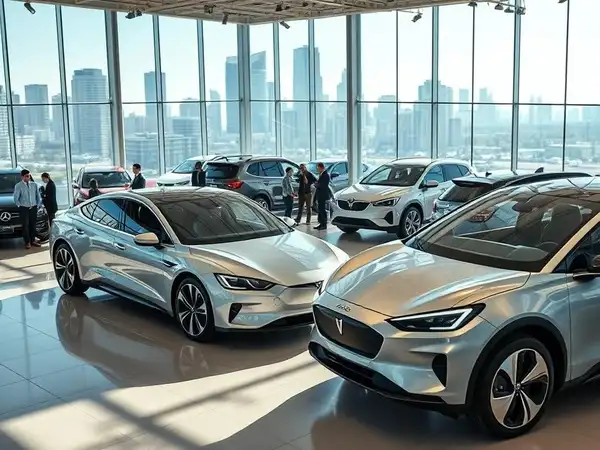
Why electric and hybrid cars are gaining traction in India
Electric & Hybrid Cars Reviews in India-In recent years, India’s auto market has seen a significant shift in the powertrain mix. While internal-combustion engine (ICE) vehicles still dominate, two alternative categories — electric vehicles (EVs) and hybrid vehicles — are increasingly relevant to Indian buyers. Rising fuel prices, stringent emissions norms, growing environmental awareness, and favourable policy pushes are all contributing to the momentum. According to the latest data, the Indian electric-vehicle industry is projected to grow from USD 2.36 billion in 2024 to USD 164.42 billion by 2033, at a CAGR of 57.23%. Meanwhile, hybrids have grown about 18 % year-on-year in FY25, despite fewer model options.
However, traction doesn’t mean easy decision-making for buyers. The Indian context brings unique factors: high upfront cost, patchy charging infrastructure (for EVs), high GST/cess on hybrids, state-by-state tax differences, service network concerns, and real-world usage conditions (heat, long distances, mixed roads).
That is why this comprehensive guide on electric & hybrid car reviews in India is built: to help you understand the market landscape, evaluate key models, compare EV vs hybrid, and navigate buying strategy with clarity.
What this review guide covers and how to use it
In this guide you will find:
- An overview of the market landscape: size, growth, policy, consumer behaviour.
- A methodology for reviewing EVs and hybrids—how to compare range, cost, features, infrastructure.
- Detailed review sections on top electric cars and top hybrid cars in India, with real-world insights.
- Buying strategy: when to pick EV, when hybrid is better, cost of ownership, resale.
- Challenges you must watch out for (infrastructure, service, tax).
- Future outlook: upcoming models, policy trends, what to expect in next 5-10 years.
Use it as a reference when assessing your next car purchase or when comparing models across powertrains. Bookmark sections relevant for you (e.g., budget EV, hybrid under ₹20 lakh, premium EV) and tailor to your region/usage.
Market Landscape for Electric & Hybrid Cars in India
Current market size, growth trends and policy dynamics
The Indian electric-vehicle market is showing promising growth. According to the India Brand Equity Foundation (IBEF), the Indian EV market (passenger four-wheelers and beyond) is forecasted to expand from US$ 3.21 billion in 2022 to US$ 113.99 billion by 2029 (a 66.52 % CAGR).This kind of growth signals a strong tail-wind for EV adoption.
On the hybrid side, while currently a smaller share, the market shows robust growth. A report indicates the India hybrid vehicles market size is estimated at US$ 0.53 billion in 2025 and projected at US$ 1.28 billion by 2029 (CAGR ~24.8 %). In FY25, despite limited model availability, hybrid sales grew ~18 % year-on-year. ETAuto.com+1
Policy dynamics matter significantly. For EVs, incentives (FAME schemes), lower GST (5 % on many EVs) and import/production linked incentives help. For hybrids, however, the scenario is less favourable: hybrids are currently taxed at ~28 % GST plus cess, leading to an effective tax rate around ~43 % in many cases. EY
Adding to that, infrastructure investments (charging stations, grid readiness) and state-level policies (tax breaks, registration benefits) play a role. For example, some states are actively promoting EV manufacturing hubs and removing additional taxes. A recent news item: the state of Maharashtra scrapped a 6% sales tax plan on high-end EVs to boost adoption. Reuters
Thus, the market is evolving rapidly—but unevenly. Growth is strong, but adoption varies significantly by region, model and segment.
Comparison between EVs (battery-electric) and hybrids in India
To better frame reviews, it’s useful to compare EVs and hybrids side by side on key dimensions:
| Feature | EV (Battery-Electric) | Hybrid (Strong/Plug-in) |
|---|---|---|
| Upfront Cost | High—battery cost adds to price. Example: many EVs in India start around ₹12-20 lakh for mainstream. CarDekho | Generally lower than EVs, but cost remains higher than pure ICE due to added hybrid hardware. |
| Running/Fuel Cost | Very low for electricity vs petrol/diesel; maintenance fewer moving parts. | Fuel-efficiency improvement vs ICE; running cost better but still fuel dependency. |
| Tax/GST Benefit | Often favourable—many states offer subsidies; GST often 5 % in many cases. | Less favourable—high GST, sometimes no specific incentives; taxed like ICE plus premium components. EY |
| Infrastructure Dependence | Home charging + public fast chargers required; limited infrastructure in many locations. | Minimal change in infrastructure—doesn’t require charging network (unless plug-in hybrid) so easier for many buyers. |
| Use-Case | Best for daily urban/suburban use with adequate charging, and for buyers ready for shift. | Good for buyers hesitant about full EV; provides “best of both worlds”; useful where infrastructure weak. |
| Resale/Technology Risk | Battery depreciation, range degradation and emerging tech may affect resale value. | Fewer tech risks compared to EV, but longer term may become “transition” tech as full EVs dominate. |
| Environmental Impact | Zero tail-pipe emissions, but battery lifecycle and production impact matter. | Reduced emissions vs ICE, but still burning fuel; less radical but practical. |
Given these comparisons, for Indian buyers the decision is not just “EV vs ICE” but “EV vs Hybrid vs ICE” — each option has trade-offs. Reviews must reflect those trade-offs honestly.
Consumer behaviour, infrastructure readiness and adoption challenges
Indian consumers still show strong preference for ICE vehicles due to affordability, wide service network and familiar technology. However, attitudes are shifting: a study on willingness to pay in India showed that consumers are willing to pay extra for reduced charging time and increased range. arXiv
Infrastructure remains a key challenge. For example, EV adoption in certain states remains very low. In Andhra Pradesh, EV market penetration was only ~1.85 % over five years, due to limited charging points (one per ~205 km of road) and cost concerns. The Times of India
For hybrids, although the model is simpler from an infrastructure standpoint, the tax burden and fewer model options limit adoption. Given both EVs and hybrids grew ~18 % in FY25 despite the challenges, this suggests pent-up demand exists. ETAuto.com
From a review-perspective, you must factor your usage pattern (city vs long distance), access to charging or dealership/service, your budget, and the resale climate in your region/state. These practical factors often matter more than specs.
Methodology for Reviewing EVs & Hybrid Cars
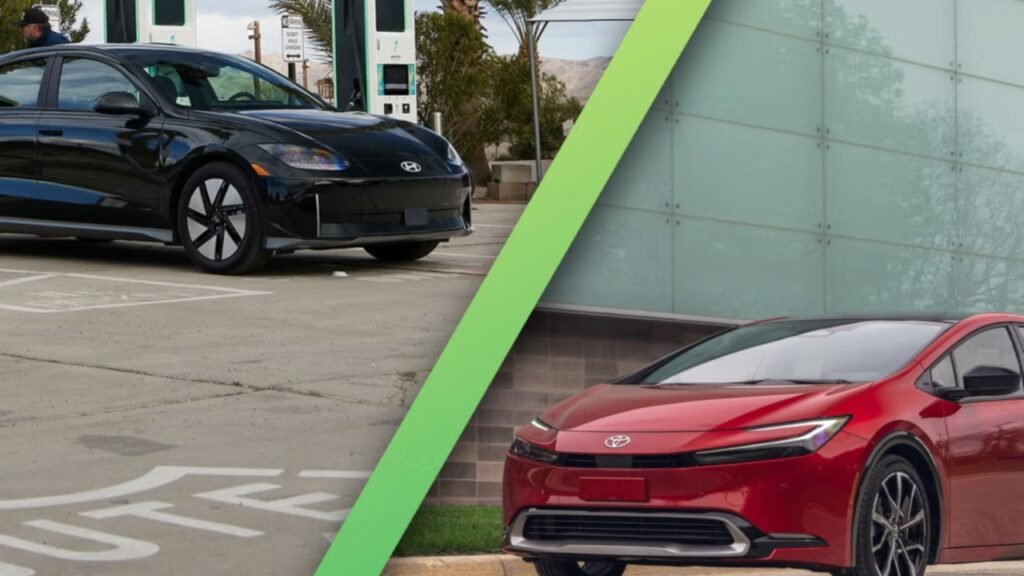
Key review metrics: range, efficiency, features, cost, infrastructure
When reviewing an EV or hybrid car in India, these metrics should form your core evaluation:
- Range / Fuel-Efficiency – For EVs: claimed range, real-world range under Indian driving conditions, charging time (AC & DC). For hybrids: fuel efficiency in real use, battery/hybrid cycle performance.
- Performance & Driving Experience – Acceleration, torque feel, pick-up, handling, ride comfort (important in Indian roads).
- Features & Technology – Infotainment, connectivity, driver-assistance (ADAS), safety features, over-the-air updates, battery warranty.
- Cost of Ownership – Upfront price (ex-showroom and on-road in your city/state), tax/registration, insurance, maintenance, running cost (electricity/fuel), battery replacement (if applicable), resale value.
- Infrastructure & Service Network – For EVs: home charging compatibility, public fast-charging network nearby, availability of service/parts for battery and electronics. For hybrids: service network for hybrid powertrain, cost of spare parts.
- Practical Suitability – Suitability to your usage pattern: city driving, periodic long drives, road conditions, climate (hot/humid), local terrain. Also variant availability, waiting period.
- Resale & Future-Proofing – Technology risk (battery or hybrid tech becoming obsolete), brand/service network strength, model popularity, availability of updates or upgrades.
Differences in reviewing hybrids vs EVs
While there is overlap, some key differences:
- Infrastructure Dependency: EVs depend heavily on charging infrastructure; hybrids much less so. So any EV review must emphasise charging readiness.
- Battery/Life Cycle Risk: EVs carry battery health/resale risk; hybrids less so (battery smaller or integrated).
- Tax & Incentive Impact: Hybrids may carry higher tax disadvantage; EVs may benefit more from incentives and state-benefits.
- Technology & Feature Leap: EVs often carry newer architecture, more software features; hybrids may preserve ICE familiarity but fewer radical changes.
- Use-Case Fit: Hybrids might fit buyers unwilling to commit to charging infrastructure; reviews should emphasise this.
Thus, when you read EV vs hybrid reviews, ensure the reviewer highlights infrastructure/context (for EVs) and tax/value trade-offs (for hybrids).
What Indian buyers should especially look out for
Indian buyers should tailor their evaluation to the local context:
- Check on-road cost for the specific state (registration, road-tax, state incentives) not just ex-showroom.
- Check waiting period / variant availability: many EV/hybrid launches have long waiting lists or constrained supply.
- Check service network: Is the brand/model supported in your city/region? Are battery/spare parts readily available?
- Understand charging reality: For EVs, home charger compatibility is fine, but public DC fast-charging, long-distance comfort, and degradation matter.
- Real-world range under Indian conditions (heat, AC use, mixed speeds) may differ significantly from claimed number.
- Resale value: Emerging technology models carry more risk; established brands often fare better.
- Compare lifetime cost: Upfront may be higher, but running cost lower; assess over 4-5 years.
By focusing on these, you’ll avoid many pitfalls.
Electric Car Reviews: Top Models & What They Bring
Here we review some of the top electric cars available (or freshly launched) in India, highlighting how they perform on the key metrics and what you as a buyer should note.
Entry-level EVs (e.g., Tata Tiago EV)
One of the most accessible EVs in India is the Tata Tiago EV. Wikipedia
What it brings:
- Affordable entry into EV mobility: addresses budget segment.
- Practical hatchback size, familiar brand network.
- Claimed range of ~250-315 km (for higher battery variant) under Indian cycle.
Review insights & buyer notes: - For city commuting, this makes sense—daily drives, shorter distances.
- Charging infrastructure still matters: if most of your use is urban and you can charge at home, range is sufficient.
- On longer drives you may have to plan stops.
- Up-front cost vs ICE/hybrid still higher, but running cost savings may tilt the balance.
Pros: Lower running cost, quieter drive, newer tech, government incentives (depending on state).
Cons: Limited range (vs longer-haul EVs), smaller size may mean compromise if you travel often or need space; home charging setup required; resale risk somewhat higher as tech is newer.
Verdict: If you predominantly drive in the city and have charging access, the Tiago EV is a compelling value proposition. For long-distance use or larger family size, consider stepping up.
Mid-range EVs and SUVs (e.g., Tata Harrier EV)
A more aspirational EV example is the Tata Harrier EV.
What it brings:
- SUV size, premium features, longer claimed range (up to ~627 km in MIDC for top variant) and multiple powertrain options including AWD.
- Strong tech (connected features, ADAS, over-the-air updates) and newer EV architecture.
Review insights & buyer notes: - This car is suited for buyers who want a major step into EV mobility and larger vehicle size.
- The larger battery and SUV configuration mean higher cost, but also more range and flexibility for longer drives.
- The charging and infrastructure requirements become more significant (fast-charging network, battery warranty, battery-service availability).
- Due to premium pricing, resale and longevity become important considerations.
Pros: Significant range, premium feel, future-proofing, EV advantages (performance, quiet drive).
Cons: High upfront cost, possibly higher insurance/maintenance, infrastructure readiness must be verified, bigger battery means higher weight (affects ride/handling and cost).
Verdict: For buyers with budget, space requirements and a readiness for EV transition, the Harrier EV is a strong mainstream EV pick in India — but only if charging infrastructure and service network in your region are mature.
Premium / Long-range EVs and Import Models
Although these may be less volume in India now, their arrival helps set benchmarks. Models with large battery packs, ultra-long range, premium brand status. They test the boundaries of EV adoption in India. Reviewers here look at: build quality, features, international pedigree vs India service readiness, resale value, import duty/tax implications.
Buyer notes: Unless you absolutely need premium brand status or ultra-long range, mainstream EVs may serve most buyers better in value terms. But for enthusiasts or premium buyers, these models are worth the premium and may hold value.
Also note: As more premium EVs arrive, trickle-down benefits (battery cost reduction, improved tech) may benefit mainstream EVs.
Summary of Pros & Cons from On-Road Reviews
Common Pros of EVs:
- Instant torque and smooth power delivery
- Quiet cabin, fewer moving parts, lower maintenance
- Lower running cost in many use-cases (especially city driving)
- Future-oriented appeal and favourable incentives in some regions
Common Cons of EVs (in Indian context):
- Higher upfront cost compared to equivalent ICE/hybrid
- Real-world range often lower than claimed, especially in hot weather or long drives
- Charging infrastructure still uneven—especially beyond metros or highways
- Waiting time, variant availability, battery service/resale concerns
As you review individual EVs, use the methodology above to see how they perform in your context (city vs long drive, charging availability, budget, variant cost).
Hybrid Car Reviews: Top Models & What They Bring
While EVs often get the spotlight, hybrids offer a compelling middle ground in India—especially for buyers seeking better fuel efficiency without full EV complexity.
Strong hybrids available in India (e.g., Toyota Urban Cruiser Hyryder)
One example: the Toyota Urban Cruiser Hyryder (and other strong hybrids) are gaining traction. According to listings, there are ~35 hybrid models in India including the Hyryder, and one price example: Rs. 16.46 lakh for Hyryder. CarWale
What it brings:
- Fuel-efficiency uplift vs pure ICE: hybrid powertrain helps especially in urban stop-go traffic.
- Advanced tech (depending on variant) while using familiar fuel infrastructure.
- Less reliance on charging infrastructure (unless plug-in hybrid) so simpler ownership model in many Indian cities.
Review insights & buyer notes: - If your use-case is mixed city/highway and you want improved fuel economy without worrying about charging, a strong hybrid may be very practical.
- Service network still important: ensure hybrid parts service, battery warranty, spare parts.
- Taxation/disincentives for hybrids are a concern: e.g., hybrids are taxed at ~43% effective GST in many cases. EY
Pros: Improved fuel economy, familiar usability, avoids “charging anxiety”, easier adoption.
Cons: Upfront cost higher than equivalent ICE due to hybrid system, less of the “EV benefits” (zero tail-pipe emissions, ultra-low running cost). As EV infrastructure improves, hybrids may become transitional tech.
Verdict: For buyers who want to upgrade from ICE and avoid charging hassle, hybrid is a very strong option—even more so in regions where EV charging is weak.
Hybrid vs EV: cost, usability, service network
From review case studies and market data:
- Running cost for hybrids improves over ICE but depends on driving pattern (city stop-go helps hybrids more).
- Upfront cost difference vs ICE may narrow over time, but tax/disincentive remains a drag.
- From usability viewpoint, a hybrid works much like an ICE car in terms of refuelling, service, familiar driving feel—this is a comfort factor for many Indian buyers.
- Service network: many manufacturers have more mature parts/spare network for hybrids (given shared ICE/hybrid components) compared to newer EVs.
In essence: hybrid reviews often highlight “near-future readiness” and “lowest-barrier upgrade”, while EV reviews emphasise “future-proofing” and “step-into major change”.
Summary of Pros & Cons from Review Insights
Pros of Hybrids:
- Better fuel economy, lower fuel cost
- Longer range/familiar refuelling habits
- Less reliance on charging infrastructure
- Good stepping-stone for EV transition
Cons of Hybrids:
- Upfront cost premium over ICE
- Tax/incentive disadvantage (compared to EVs)
- Not as radical as EVs (running cost still includes fuel)
- Might be viewed as transitional tech—resale risk if EV becomes dominant quickly
As you evaluate hybrid cars, ask: “Does this hybrid variant deliver meaningful value over ICE? How does it compare with waiting for the next EV? What is the service/support infrastructure? Is the tax cost justified by fuel savings?”
Buying Strategy — Which Car to Choose and Why
When to pick an EV vs a hybrid or ICE in India
Choosing between EV, hybrid or ICE depends on several factors: your driving pattern, budget, infrastructure in your region, long-term hold period, and your tolerance for new tech. Here’s a guidance framework:
Pick an EV if:
- You do a lot of city/suburban driving (short to medium distances) and have regular access to home/office charging.
- You are comfortable with new technology, and want lower running cost and future-proofing.
- Your state/region offers good incentives, and you are planning to hold car for several years (to recoup higher upfront cost).
- You travel long distances occasionally but have access to fast-charging networks and good route planning.
Pick a Hybrid if:
- You drive mixed city and highway, and want improved fuel economy but without worrying about charging infrastructure.
- You are not ready for full EV commitment (charging, battery concerns, resale risk) but still want an upgrade over pure ICE.
- Your region has weak EV charging infrastructure currently.
- You prefer familiar ownership experience with some forward-looking tech.
Stick with ICE if:
- You drive very long distances frequently in areas with limited charging options.
- Budget is constrained and upfront cost of EV/hybrid is too high.
- You plan to replace vehicle in short time horizon (1-2 years) and resale risk of newer powertrains worries you.
Total cost of ownership (TCO), resale value and real-world range
When reviewing or buying, move beyond “ex-showroom price” to true TCO. Consider:
- Running cost: electricity/fuel cost per km under your driving pattern. EV running cost may be significantly lower in city driving.
- Maintenance: EVs have fewer moving parts but battery warranty, specialised service may cost more; hybrids have additional powertrain complexity.
- Resale: newer powertrains carry resale risk; check brand strength, service network, entry cost of battery replacement (for EVs), market sentiment.
- Real-world range: EV’s claimed range may drop under Indian conditions (high AC use, high ambient heat). For hybrids, claimed mileage may differ in real world.
Example: EV penetration for 4-wheelers improved from 1.9% in H1 FY25 to 3.2% in Q1 FY26 in India.
Also, while EV sales jumped 53% in H1 2025 in India, the leader (Tata Motors) saw a 14% decline in EV sales in H1-24 vs H1-25—showing volatility.
These numbers suggest growth potential but also risk: if you buy EV, buy with long-term horizon and awareness of infrastructure.
Infrastructure readiness: home charging, public charging, service network
In India, infrastructure readiness is critical. When reviewing EVs or hybrids:
- Home charging: Do you have reliable parking and charger installation? Without it, EV ownership becomes harder.
- Public charging: Are fast-charging stations available in your city/regions you travel (especially for long drives)?
- Service network: Are spares and service for battery, electronics, hybrid modules available in your city? Are service centres certified by brand?
- State incentives & local grid support: Some states offer subsidies, cheaper electricity, tax breaks. Others may lag. For example: EV adoption in some states is <2% due to infrastructure and support gaps. The Times of India
In your review of any model, check how the manufacturer supports you in your region: waiting times, battery warranty, maintenance package.
State-by-state factors in India (taxes, incentives)
India has complex regional variation in vehicle cost and incentives. For example:
- Some states reduce registration or road-tax for EVs, making on-road cost much lower.
- Some states may still impose higher taxes or registration fees.
- Hybrids often face higher GST/cess compared to EVs (which may be incentivised).
For example, hybrids in India are taxed at high effective rate due to GST/cess combination. EY
As a buyer, your on-road cost (ex-showroom + state registration + road-tax + insurance) may differ significantly from national quoted price. In your review, ask for “on-road” in your city and state—especially for EVs/hybrids.
Also, given the pace of change, check for upcoming policy announcements in your state: for example, the removal of an EV sales tax proposal in Maharashtra is a recent development. Reuters
Challenges & Things to Watch in the EV/Hybrid Journey
Infrastructure gaps and range anxiety
One of the most common critiques of EV adoption in India is charging infrastructure. Without reliable home or public chargers, range anxiety remains real. For example, Andhra Pradesh saw just 1.85% EV penetration in five years partly due to limited charging stations (only one per ~205 km of road).
When reviewing EVs, check how the car performs in “real-world” use: city, highways, hot climate, AC use, charging downtime. Good reviews will provide real-life range under Indian conditions.
For hybrids, infrastructure is less of a hurdle—but review must check hybrid service network, battery warranty and hybrid-specific parts availability.
Battery life, service, resale concerns
EVs depend heavily on battery performance over time. Battery degradation, replacement cost, warranty coverage are all factors. Reviews should highlight what manufacturers promise (e.g., 8 years/160,000 km warranty) and what actual users report.
Hybrids too have hybrid-module lifespan and service part availability. Since hybrids are fewer in India currently, resale market and service reliability are still evolving.
Resale value is also a concern: new tech may depreciate faster; review commentary on brand-resale support, battery replacement cost, second-hand demand.
Taxation and policy hurdles (especially for hybrids)
We mentioned earlier that hybrids face higher GST/cess and less favourable policy incentives. Reviews must reflect this cost disadvantage. For example, EY report shows hybrids taxed at ~43% effective tax rate.
EV policy too can change: incentives may phase out, or states may adjust tax/registration. For instance, one state considered adding a 6% tax on EVs but later scrapped it. Reuters
Hence review must factor policy risk: buying a vehicle based on current incentives may be risky if policy shifts.
Real-world vs claimed specs, waiting periods, variant availability
Another frequent issue in reviews: many EV/hybrid models claim ranges or features that may not be realised under Indian conditions (mixed driving, heat, AC use). Some models have long waiting lists, variant constraint (only top trim carries full features) or extra accessories cost.
Before buying: check whether local dealership has allotment, what launch/booking conditions are, expected waiting time. Reviews that omit waiting/availability are incomplete.
Also model updates/new generations may come quickly: buying older generation may impact resale value.
In short: review metrics must include practical reality, not just specs on paper.
The Future Outlook — What’s Next for Electric & Hybrid Cars in India
Upcoming models and segments to watch
The next 2-5 years in India are likely to bring:
- More affordable EVs entering the market (aim under ₹10 lakh), as battery cost falls and localisation increases. For example, several new models under ₹10 lakh are being talked about.
- Greater hybrid model rollout as manufacturers view hybrid as interim step before full EV. For example, the South Korean automaker Hyundai Motor Group plans hybrid launches in India by 2026/27.
- Improved charging infrastructure: more fast-chargers, battery-swap pilots, charging networks along highways.
- Better service and parts network maturity for EVs/hybrids.
- Tax and policy alignment: states offering more incentives, manufacturers localising battery/EV production to reduce cost.
- Model generation updates: existing EVs/hybrids get second-gen tech, improved battery, better software features, more affordable variants.
In your review context: a model bought today may still be competitive in 5 years if it has good service and support; but watching upcoming launches is wise.
Policy and infrastructure trends shaping the next decade
Policy will remain a major driver. Key areas:
- Incentives or tax breaks for EVs/hybrids; removal or change could impact cost.
- Infrastructure mandate: charging stations, grid upgrades, standardisation, interoperability.
- Battery supply-chain localisation: reducing import dependence, lowering cost, improving service.
- Safety and technology regulation: as EV/hybrid adoption grows, regulation for batteries, fires, disposal, service come into focus.
For example, the EV share in Indian 4-wheelers improved from 1.9% in H1 FY25 to 3.2% in Q1 FY26. Business Standard This shows how policy, model availability and adoption are improving—but room remains.
Infrastructure readiness remains regional: some states are ahead, others lag. That means your buying decision must factor local conditions.
How consumer expectations and market dynamics will evolve
As more EVs/hybrids launch, consumer expectations will change:
- Feature enrichment will increase: connected car, ADAS, OTA updates become standard.
- Battery range and charging convenience will improve.
- Ownership models may shift: subscription, car-sharing, battery-as-service may gain traction.
- Used-EV/hybrid market will mature: earlier concerns around resale may ease.
- Manufacturer and brand loyalty may shift as new entrants (EV-only players, tech firms) join the market.
For you as a buyer: consider how “future-proof” your purchase is. A good review today will factor in not just immediate value but expected tech lifecycle.
Conclusion
Recap of key take-aways for electric and hybrid car buyers in India
- Electric and hybrid cars are increasingly viable in India: strong growth, expanding model choices, but still carry trade-offs.
- EVs offer lower running cost, future-proofing and strong tech—but require charging readiness and higher upfront cost.
- Hybrids offer a practical middle ground: improved fuel economy, familiar usability and fewer infrastructure demands—but currently less tax-benefit and fewer model options.
- Reviews of EVs/hybrids must go beyond specs: examine real-world range/efficiency, service/infrastructure readiness, waiting periods, resale value, and region-specific tax/charging/incentives.
- Buying strategy must align with your usage pattern, budget, region and long-term horizon. Don’t rush into EV just because it’s “new”—choose based on fit.
- Infrastructure, state policies, charging networks and market dynamics vary widely across India—check local specifics (your city/state).
- Looking ahead, many more models (especially affordable EVs and hybrids) are coming; policy/infrastructure will evolve quickly; early adopters may gain, but risk remains.
Final advice: how to stay informed and make the right choice
- Follow trusted review sources and compare EV/hybrid models using consistent metrics (range, TCO, service, infrastructure).
- Visit local dealerships, check waiting times, variant availability, service/battery warranty terms.
- Check your home charging feasibility if going EV: parking, power supply, available charger installation options.
- Check your state’s tax, registration, incentive regime: what is on-road cost in your city?
- Consider your long-term usage pattern: if you drive >50 km/day and have long highway trips frequently, ensure the EV/hybrid you choose supports that.
- Think long term: will you keep this car 4-5 years? What will resale value look like? What tech will become standard?
Also Get Some Information about
Used Cars Reviews in India (2025)
New Car Reviews: Ultimate Guide to Your Next Ride
Luxury Cars Reviews in India 2025
Global Auto News 2025 Trends, Highlights & Insights
Concept Cars & Future Tech in India
Shocking Car Price Hike In 2025: What Buyers Must Know
Auto Industry Updates 2025-2026
Upcoming Car Launch: New Models & Key Highlights
Seasonal Car Maintenance Guide for Monsoon, Winter & Summer
Engine and Battery Tips — How to Keep Your Vehicle Running Strong
Price & Features Comparison 2025: Best Cars Compared
Fuel Efficiency Comparison of Cars in India 2025
Car vs Car Comparison 2025: Features, Mileage & Value
First-Time Car Buying Tips (2025 Guide)
Best EV Buying Guide for Indians (2025)
Best Mileage Cars in India 2025
Best Family Cars in India 2025
Best Cars Under 10 Lakh in India 2025 – Hatchbacks, SUVs & Entry EVs Compared