


Introduction
SUV & Sedan reviews 2025 – In the sprawling and rapidly evolving Indian automobile landscape, the question of whether to choose a sedan or an SUV has become more than just a matter of body style—it has become a statement of lifestyle, aspiration and practicality. Over the past decade, we have seen dramatic shifts: what was once a sedan-dominant market has increasingly tilted toward SUVs. And yet, sedans continue to hold appeal for certain buyers.
In this comprehensive review and guide, we’ll dive deep into the world of SUVs and sedans in India—how the market has changed, what drivers are looking for, how the two types compare across multiple criteria, and ultimately how you should decide which is right for you. Along the way we’ll look at specific models, review strengths and weaknesses, and project what the future holds. Whether you are an urban professional choosing your first car, a family driver planning road trips, or an enthusiast looking to upgrade, this article aims to be your go-to resource.
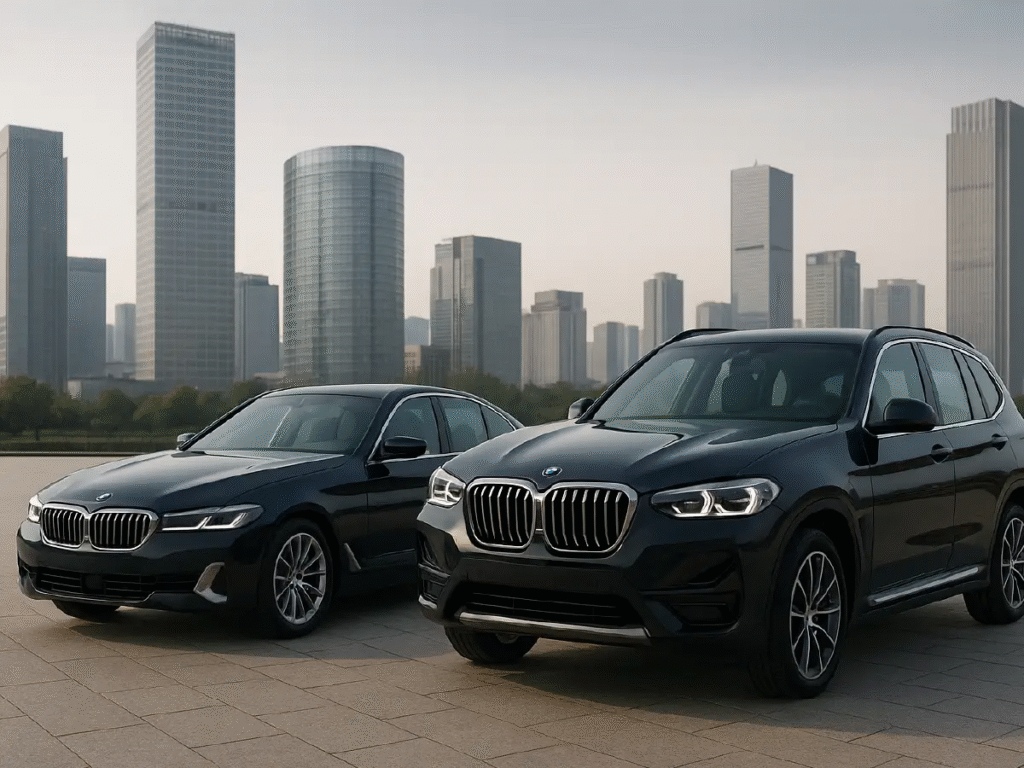
H2 2. Understanding the Segment: Sedans vs SUVs in India
H3 2.1 What defines a sedan?
A sedan is traditionally a three-box configuration vehicle: an engine compartment, a passenger compartment and a separate boot (luggage) compartment. In India, sedans have long been associated with refinement, comfort and sophistication—think of luxury executive cars or well-appointed family sedans. Their lower ride height and sleeker silhouette often lend them a smoother ride and better aerodynamics.
From the design viewpoint, sedans are lower to the ground, often more aerodynamic, and typically tuned for on-road comfort rather than rugged terrain. In India they have appealed to buyers who prioritise highway comfort, refined driving, executive presence, and efficient commuting.
H3 2.2 What defines an SUV?
An SUV—sport utility vehicle—in the Indian context has grown from the once rugged off-roader to a mainstream family and urban vehicle. The characteristics include higher ground clearance, more commanding seating position, often a more robust body, more space, and the flexibility to handle rougher roads or less-than-ideal infrastructure.
In India, SUVs can range from sub-4-metre “compact SUVs” to large 7-seat behemoths. The ride height, visual road presence, and “premium feel” have increasingly contributed to their appeal. According to industry analysis, their design has been adapted to urban use, even while retaining key SUV cues.
For example: “With their dominating road presence, high ground-clearance, bulky look … SUVs are winning hearts of those who were earlier fixated on hatchbacks and then upgraded to sedans.” The Economic Times
H3 2.3 Historical evolution of sedans and SUVs in the Indian market
Until perhaps a decade or so ago, sedans had a strong foothold in India. Models like the Honda City, Hyundai Verna or the Maruti Suzuki Ciaz represented aspirational purchases for many Indian buyers seeking a level above the hatchback segment. The sedan typified “grown-up” status or upscale commuting. Over time, SUVs began to gain share—initially the larger but more expensive models, later down-scaled to more affordable compact and crossover versions suited to Indian road conditions and budgets.
By 2024-25 the shift became much more pronounced. SUVs accounted for a majority share of new passenger vehicle sales in India, while sedans’ share diminished significantly. For instance, data shows SUVs now make up roughly half of all passenger vehicle sales, doubling their share in five years. The Economic Times+1
At the same time, sedans—especially in the mass-market segment—have seen sharp declines in sales. One report notes that the share of sedans in Indian car sales has fallen from ~19% in FY19 to around 9% by FY25.
So the evolution reflects several factors: changing consumer preferences (toward higher ride height, more space, more features), improving manufacturing and marketing of SUVs, the crossover/hatchback-SUV blend providing SUVs at lower price points, Indian road conditions (where higher ground clearance is appealing), and shifting brand strategies. We’ll explore the details next.
H2 3. Current Market Trends in India
H3 3.1 Market share of SUVs and sedans
As noted above, the SUV market share in India has risen steeply. One analysis shows that as of December 2024 the SUV share of passenger vehicles stood at roughly 52 %. Another report described that SUVs and MPVs combined edged to 65 % share of total car sales in FY25. mint Meanwhile, sedans lagged behind, especially in the mass-market segment.
The growth of SUVs is clearly not just a niche trend—it has become the dominant mainstream preference in many segments. For car manufacturers this means prioritising SUV development, trimming sedan portfolios, or converting models into crossover formats.
H3 3.2 Consumer preferences and shifting demand-SUV & Sedan reviews 2025
What is driving this shift? Several intertwined factors:
- Road and infrastructure reality: Indian roads still often have potholes, speed-breakers, uneven surfaces. A vehicle with higher ground clearance and robust suspension (i.e., an SUV) feels more comfortable and secure.
- Social/aspirational factors: Higher ride height, larger stance, commanding presence — these contribute to the SUV’s popularity in India as a statement of status and safety.
- Family usage: Many Indian families seek vehicles that accommodate more passengers, more luggage, and flexible seating. SUVs provide that more naturally than sedans.
- Feature availability: Many SUVs now come with features which once were only in premium sedans—big screens, connectivity, ADAS tech, etc — making SUVs more appealing.
- Brand strategy & availability: Manufacturers have responded by offering many compact SUVs (or crossover-SUVs) targeting Indian urban buyers, at price points previously occupied by sedans.
- Resale & perception: In some segments, owning an SUV is perceived to be more future-proof or resilient, though this depends on model and brand.
One industry commentator noted: “The form factor works brilliantly in Indian conditions, and automobile manufacturers have transformed their product portfolios to feed an explosion of demand.” The Economic Times
H3 3.3 Brand strategies and model launches
Due to the shifting demand, most major Indian and global car makers now target SUV/crossover segments much more aggressively, often at the expense of sedan launches. For example, one luxury car maker said that sedans still form 40 % of their India business but that is down from higher levels. mint Meanwhile, mass-market manufacturers have stated that SUVs will form > 80 % of their future portfolio in India.
Moreover, many new compact SUVs are being launched—and even premium brands are working on smaller SUVs for India. All of these underscore how sedans are being (in some cases) deprioritised in favour of SUVs. For a buyer, this means more options in SUVs, and perhaps fewer new sedans or fewer refreshes.
H2 4. Key Comparison Criteria: What to Review-SUV & Sedan reviews 2025
When reviewing and comparing sedans vs SUVs in India, it helps to break down into specific criteria. Here are the major factors to consider:
H3 4.1 Design & aesthetics
Design plays a big role. Sedans often score on elegance, aerodynamic styling, sleek profile, low-centre of gravity stance. SUVs, by contrast, emphasise strong road presence, higher beltline, tall stance, perhaps more rugged cues. In India, the higher seating position and imposing presence of SUVs add to their appeal. But sedans may win on refined looks.
H3 4.2 Space, seating & comfort
Here, SUVs typically offer more: more cabin headroom, legroom (in some models), more flexible boot/luggage space (and sometimes 5 + 2 seating). Sedans provide comfortable seating for 4-5, a well-balanced ride height for easy ingress/egress, often better ride comfort on smooth roads due to lower centre of gravity.
H3 4.3 SUV & Sedan reviews 2025-Ride, handling & performance
Sedans often have the advantage of more car-like handling, better cornering stability, and more refined ride on highways. Because they are lighter and lower, their dynamics can feel more “sporty” and smooth. Conversely, SUVs, with higher ride height, larger body, higher centre of gravity, may have more body roll or feel less nimble—but this depends heavily on model and suspension tuning.
Indian roads demand a lot: rough patches, undulations, speed-breakers, urban congestion and highway stretches. An SUV’s suspension and ground clearance may provide better comfort over potholes and rough patches, whereas a sedan may shine on smooth highways and city commuting. Thexpress Holidays+1
H3 4.4 SUV & Sedan reviews 2025-Fuel efficiency, cost of ownership & maintenance
Sedans often have the edge in this category. Because they are lighter and more aerodynamic, they tend to deliver better fuel efficiency (especially for petrol variants). Their tyres, parts, and maintenance costs may also be lower. One source states sedans “take the win” for fuel efficiency. Indus Motors+1
On the other hand SUVs often cost more for purchase, insurance, tyres, maintenance. They may consume more fuel—especially in city driving. That said, compact/crossover SUVs are closing the gap.
H3 4.5 SUV & Sedan reviews 2025-Safety, features & technology
Both sedans and SUVs can offer advanced features nowadays (ADAS, multiple airbags, connectivity). However from safety vantage point, SUVs may provide perceived advantages: higher seating for better visibility, larger body mass and higher ride height may help in crash protection. One article notes SUVs offer “size, performance and safety”.
But in real terms, crash-ratings, build quality, safety equipment matter more than just based on body style. A low-quality SUV may be less safe than a well-built sedan.
H3 4.6 Resale value & long-term viability
In India, resale value is an important factor. With shifting preferences towards SUVs, some sedans are seeing depressed resale values or slower demand in used market. One report says that SUVs typically command higher resale value compared to sedans. Meanwhile, as more manufacturers focus on SUVs, the support and supply of parts, newer variants may favour SUVs. Buyers should consider not just the upfront cost but five-year cost, servicing, value retention.
H2 5. Sedans in India: What’s Working, What’s Not-SUV & Sedan reviews 2025
H3 5.1 Popular sedan models reviewed-SUV & Sedan reviews 2025
Sedans still find favour. Models like Honda City, Hyundai Verna, Maruti Ciaz have been popular. These cars offer comfortable ride, premium feel, and refined driving dynamics. Even so the segment is shrinking.
H3 5.2 Strengths of sedans in India-SUV & Sedan reviews 2025
- Excellent highway ride comfort and stability thanks to lower centre of gravity.
- Often better fuel efficiency and lower overall cost of ownership.
- More refined look and feel; often preferred for executive use or chauffeur-driven cars (especially in the premium segment).
- Easier entry/exit compared to very high-SUVs, and less likely to feel bulky in tight city lanes or parking spots.
H3 5.3 Weaknesses / challenges for sedans-SUV & Sedan reviews 2025
- Lower ground clearance makes them vulnerable on badly maintained roads, speed-breakers or flood-prone areas.
- Reduced perceived road presence compared to SUVs; lower seating height.
- Fewer new model launches and shrinking segment mean choices may become limited.
- With buyer preference shifting, resale value may suffer. Reports show sedan sales sliding 12% in 2025 in India. The Times of India
H3 5.4 Case study: A successful sedan vs a sedan losing ground-SUV & Sedan reviews 2025
Successful sedan: The Maruti Suzuki Ciaz (and global-brand sedans by luxury makers) are still holding up thanks to brand value, features and positioning. The article noted that while overall sedan market is down, certain well-executed models buck the trend. The Times of India
Sedan losing ground-SUV & Sedan reviews 2025: Mass-market models like Honda City and Hyundai Verna in India have seen sharp fall in volumes. For example, Honda City saw ~35% decline, Verna ~48% decline in recent years. mint
Thus, while sedans aren’t dead, they face headwinds—especially in the mass-market.
H2 6. SUVs in India: The Rising Titans
H3 6.1 Popular SUV models reviewed-SUV & Sedan reviews 2025
SUVs dominate new launches and sales. Whether compact SUVs (sub-4m or just above), mid-size or full-sized, the popularity is clear. For example the Škoda Kushaq achieved five-star safety rating and is built for the Indian market. Wikipedia
Another example: The sales of the Tata Nexon (a compact SUV) soared ~50% in recent months. Navbharat Times
H3 6.2 Strengths of SUVs in the Indian context
- Higher ride height and ground clearance make them well-suited for Indian road conditions (potholes, speed-breakers, uneven surfaces).
- More generous cabin space, better flexibility for families, luggage, 5 + 2 seats (in some models).
- Strong road presence appeals to aspirational buyers.
- The trend momentum means more features, newer tech, more options in smaller/budget SUVs.
- In used/resale market, many SUVs hold value strongly.
H3 6.3 Weaknesses / challenges for SUVs
- Larger size may be tougher in congested city lanes, tighter parking.
- Fuel efficiency often lower than comparable sedans; running cost may be higher.
- Higher insurance, tyre and maintenance costs.
- Despite compact SUV segments, some feel that SUVs are still heavier/bulkier than ideal for urban commuting.
- Some SUV models sacrifice ride refinement or handling compared to sedans.
H3 6.4 Case study: Compact SUV craze & full-sized SUV value
Compact SUVs such as Tata Nexon, Kia Sonet, etc are thriving. The report that Nexon achieved 50% growth in sales highlights this trend.
Meanwhile premium/Luxury SUVs are also enabling manufacturers to ride out slowdowns. As one Financial Times article put it: “Indian carmakers count on SUV sales to ride out slowdown … SUV sales grew 14 per cent in 2024, more than double the overall market’s 5 per cent.”
Thus, whether it’s compact, mid-size or premium, SUVs are the king-makers in India’s evolving car market.
H2 7. Choosing Between SUV and Sedan: What Should You Pick?-SUV & Sedan reviews 2025
H3 7.1 Buyer personas & intended use
- Urban professional / city commuter: If you mostly drive in traffic, park in tight spaces, do commuting and occasional highway drives, a sedan may serve you well: easier to manoeuvre, better fuel economy, lower cost.
- Family driver / weekend-traveller: If you often have multiple passengers, luggage, road-trips to hill stations or weekend getaways, or travel via uneven roads, an SUV offers more flexibility.
- Rural / challenging-terrain driver: If you traverse rough roads, rural routes, assorted terrain, the higher clearance and ruggedness of an SUV become valuable.
- Luxury/chauffeur-driven buyer: Interestingly, in the premium segment sedans still hold traction because of rear-seat comfort, executive feel. As one auto-executive observed: “For affluent buyers… sedans inherently deliver better than SUVs.” mint
H3 7.2 Budget, running cost & financing considerations
When choosing between sedan and SUV you must consider total cost of ownership: purchase price, financing/EMI, fuel, maintenance, insurance, tyres, servicing, resale. Sedans typically offer lower initial cost and running cost. SUVs may cost more upfront and in running but if that cost buys you more utility or status, it may be worth it.
Also, loan eligibility, EMI burden, parking costs and insurance premiums differ.
H3 7.3 Road conditions, terrain & Indian infrastructure realities
In India, your choice should reflect your typical routes: city roads with heavy traffic vs highways, frequent potholes, speed-breakers, rural drives. An SUV makes sense in India’s patchy infrastructure; a sedan may feel more at home where roads are smooth. One guide summarising this: “SUV for rough terrain or large groups; sedan for smooth highway or urban.” Thexpress Holidays+1
Also consider parking space in your home, society restrictions (some housing societies in metro cities have restrictions on large vehicles), etc.
H3 7.4 Future trends: electrification, hybrids, changing regulations
The automobile world is changing fast. Electrification, hybridisation, stricter safety and emission norms, shared mobility, autonomous driving—all these impact sedans and SUVs. For example, SUVs are increasingly offered in hybrid/electric formats, narrowing the efficiency gap. Sedans may have to evolve or reposition themselves. As one blog said: “Powertrains that are both electric and hybrid are becoming more common… lightweight materials and better aerodynamics also helping sedans and SUVs get better gas mileage.” Indus Motors
For Indian buyers it means when selecting now, consider how future-proof the vehicle is: is the platform ready for hybrids/EVs, are the variants offered, what are the support ecosystem, etc.
H2 8. Predictions for the Next Decade in India’s Car Market
H3 8.1 How sedans might evolve or adapt
Sedans may need to reinvent themselves in the Indian market. Possibilities:
- More premium sedans (luxury segment) may continue to thrive (especially chauffeur-driven or executive buyers).
- For mass market they may shrink/merge into crossover-sedan hybrids or niche segments.
- Manufacturers may focus on electrified sedans leveraging lower centre-of-gravity and aerodynamics for EV performance.
- Sedans may become more about refinement, technology, brand-prestige rather than utility.
H3 8.2 How SUVs might expand or differentiate
- SUVs will continue to dominate, but differentiation will increase: compact, mid-sized, luxury, off-road capable, hybrid/EV SUVs.
- We’ll see “soft‐roader” SUVs (crossover SUVs) tailored for urban buyers, blurring line with sedans/hatchbacks.
- Advanced features: ADAS, connected car tech, electrified variants will be important.
- Resale value and lifecycle support will matter more as used-SUV market expands.
H3 8.3 Impact of EVs, shared mobility & autonomous driving
India is gearing up for electrification. EVs and hybrid vehicles may reshape both sedan and SUV segments. EV architecture may favour lower-slew sedans or crossover-SUVs with better aerodynamics and range. Shared mobility and subscription models may change ownership patterns—maybe buyers will prefer flexible or leased vehicles. Autonomous driving and connected ecosystems might shift the value proposition from size/presence to tech/features.
H3 8.4 What this means for buyers, manufacturers & designers
For buyers: think long term—will the car stay relevant? Consider platform, tech, resale value, maintenance ecosystem.
For manufacturers: product planning will favour segments with growth potential (clearly SUVs) but those who adapt sedans intelligently may carve niche.
For designers (such as you, Manpreet, with your textile design and visual-aesthetic interest): there is opportunity in interior design, materials, advanced unified surfaces, new fabrics and tech-integration especially as interiors become more car-as-living-space. Whether sedan or SUV, cabin design and materials differentiate.
H1 9. Conclusion-SUV & Sedan reviews 2025
In summary, the SUV wave in India is not a mere trend—it is a structural shift in how Indian buyers view cars. Sedans still have their place, particularly for refined driving and certain use-cases, but they are under pressure. When reviewing SUVs vs sedans in India, the wise buyer looks beyond body style: they examine usage, road conditions, cost, future-proofing, and value retention.
If you drive mostly in city/commute with emphasis on efficiency and refinement, a well-chosen sedan may serve extremely well. If you carry family, luggage, frequent highways or rougher terrain, or desire bigger presence, an SUV may be the smarter choice.
Also go through
Also Get Some Information about
Used Cars Reviews in India (2025)
New Car Reviews: Ultimate Guide to Your Next Ride
Luxury Cars Reviews in India 2025
Electric & Hybrid Cars Reviews in India
Global Auto News 2025 Trends, Highlights & Insights
Concept Cars & Future Tech in India
Shocking Car Price Hike In 2025: What Buyers Must Know
Auto Industry Updates 2025-2026
Upcoming Car Launch: New Models & Key Highlights
Seasonal Car Maintenance Guide for Monsoon, Winter & Summer
Engine and Battery Tips — How to Keep Your Vehicle Running Strong
Price & Features Comparison 2025: Best Cars Compared
Fuel Efficiency Comparison of Cars in India 2025
Car vs Car Comparison 2025: Features, Mileage & Value
First-Time Car Buying Tips (2025 Guide)
Best EV Buying Guide for Indians (2025)
Best Mileage Cars in India 2025
Best Family Cars in India 2025
Best Cars Under 10 Lakh in India 2025 – Hatchbacks, SUVs & Entry EVs Compared