


Introduction-DIY Maintenance Guide: Simple Car Care Tips (2025)
- Why DIY maintenance matters for car owners in India in 2025
- How the Indian ownership landscape has changed (new tech, hybrids/EVs, cost of service)
- What this guide will cover: tools, tasks you can do yourself, tasks you should outsource
H2: Getting Started with DIY Car Maintenance
- H3: Why DIY works: benefits (cost-saving, empowerment, quicker fixes)
- H3: What tools you’ll need for basic maintenance at home
- H3: Safety & preparation: working in Indian garages, what to watch for
- H3: Understanding your car’s manual, service schedule and variant-specific info
Get Some Information about SUV & Sedan reviews 2025
H2: Routine DIY Maintenance Tasks (Monthly / Quarterly)
- H3: Checking oil, coolant, brake fluid and washer fluids
- H3: Checking tyre pressure, tread depth, wheel bolts & visual tyre inspection
- H3: Battery check and terminals cleaning
- H3: Air filter, cabin filter, windscreen wipers, lights – simple replacements
H2: Exterior & Interior DIY Care Tasks
- H3: Car wash, waxing/sealant, paint protection, minor scratch repair
- H3: Cleaning wheels, rims, under-body rinse (especially for Indian roads)
- H3: Interior cleaning: vacuuming, upholstery maintenance, dashboard/leather care
- H3: Seasonal cleaning tips: monsoon, summer, coastal conditions
H2: DIY Mechanical Checks & Minor Fixes
- H3: Changing engine oil & filter (when feasible)
- H3: Replacing basic components: wiper blades, bulbs, fuses
- H3: DIY inspecting suspension, alignment, brake pad visual checks
- H3: When to stop DIY and seek professional help
H2: DIY Care for New Tech Cars (Hybrids, EVs, Connected Cars)
- H3: What’s different in 2025: hybrid/EV systems, sensors, connectivity features
- H3: DIY tasks suitable for EV/hybrid owners (battery check, tyre/underbody)
- H3: What not to DIY in modern cars: high-voltage systems, software updates
H2: Budgeting & Scheduling Your DIY Maintenance
- H3: How to create a DIY maintenance calendar for 2025 India usage (city vs highway)
- H3: Cost-effective approach: prioritising high-impact tasks
- H3: Record-keeping, service logs, DIY vs paid service trade-offs
- H3: Tools, parts sourcing, safety gear and setting up your home garage
Conclusion
- Recap of major DIY maintenance steps and benefits
- Final thoughts: making DIY part of your car-ownership habit
- Encouragement: you can protect value, reduce cost, and enjoy the car more
2. SEO Titles & Keywords
Potential SEO-Optimized Titles
- “DIY Car Maintenance Guide India 2025 – Essential Tools & Tasks for Every Owner”
- “How to Maintain Your Car Yourself in India 2025: Step-by-Step DIY Car Care”
- “2025 Indian Car DIY Maintenance – Routine Checks, Exterior & Interior Care, New Tech Tips”
- “Complete DIY Maintenance Checklist for Indian Cars 2025: Save Money, Drive Smart”
- “DIY Car Maintenance for India 2025: Your Free Home Workshop Guide”
Target Keywords (short-tail + long-tail)
- DIY car maintenance India
- car maintenance tips India 2025
- how to maintain your car India
- routine car maintenance checklist India
- DIY car care India
- car DIY tasks India 2025
- basic car maintenance at home India
- car wash and cleaning DIY India
- tyre and battery check DIY India
- EV DIY maintenance India 2025
- hybrid car owner maintenance tips India
- tools for car maintenance at home India
- budget DIY car maintenance India
- seasonal car maintenance India monsoon summer
- car maintenance schedule India 2025
3. Blog Content (5,000+ words)
H1: DIY Maintenance Guide for Cars in India 2025
Introduction
Owning a car in India today means more than simply driving it from point A to point B. With rising service costs, increasing features (connectivity, ADAS, hybrid/EV systems), and demanding road/traffic conditions, car maintenance is a real expense—and a responsibility. That’s where DIY (Do-It-Yourself) car maintenance becomes a smart move. It’s not just about saving money (though that’s a big benefit); it’s about understanding your vehicle better, catching issues early, and feeling in control of your ownership.
In 2025, many Indian car owners are embracing DIY maintenance. The reasons? Manufacturers are launching more feature-rich cars (even in affordable segments), service costs and labour charges have increased, and many owners want to keep their cars longer (for resale value or simply to avoid frequent replacements). What’s more, many basic tasks are straightforward and safe to do at home if you are equipped and cautious.
This comprehensive guide is written with the Indian car owner in mind. We’ll walk through the tools you need, the maintenance tasks you can safely do at home, how to care for both exterior and interior, DIY mechanical checks, special considerations for newer tech cars (hybrid/EV), budgeting and scheduling. By the end you’ll have a clear roadmap to maintain your car smartly—even if you’re doing much of the work yourself.
Let’s get started with the basics.
H2: Getting Started with DIY Car Maintenance
H3: Why DIY works: benefits (cost-saving, empowerment, quicker fixes)
One of the biggest motivations for DIY maintenance is cost savings. A simple oil check or air filter replacement at home may cost a few hundred rupees instead of a few thousand at the workshop. But beyond cost, there are other benefits:
- Empowerment and understanding: When you perform basic maintenance, you become familiar with your car—its behaviour, sounds, sensors. This helps you catch anomalies early.
- Quicker turnaround: Waiting for a workshop booking can delay fixes; doing things yourself means less downtime.
- Better resale potential: Cars that show a caring owner (you have personal logs, notes) often impress second-hand buyers.
- Reduced surprises: When you are hands-on, you see wear & tear earlier and avoid larger breakdowns—which is particularly important in India where roads, weather and usage are harsh.
DIY does have limits (we’ll cover when you should stop). But for everyday tasks, it’s highly worth it.
H3: What tools you’ll need for basic maintenance at home
A modest but good toolkit makes home maintenance smooth. Here’s a recommended starter kit (for Indian cars 2025):
- Basic socket-set & spanners (metric sizes common in Indian cars)
- Torque wrench (especially for wheel bolts)
- Jack and jack stands (make sure rated for your car’s weight)
- Tyre pressure gauge and portable air pump or access at fuel station
- Microfibre cloths, bucket, car shampoo, wax/sealant for cleaning
- Digital multimeter (for battery and basic wiring checks)
- Funnel, drain-pan (for fluid top-ups)
- Work gloves, safety glasses (Indian climate dust)
- Service manual or manufacturer-app smartphone file (variant-specific data)
With these, you can handle many routine checks and basic fixes safely.
H3: Safety & preparation: working in Indian garages, what to watch for
Working at home demands caution. In India, weather, dust, insects, rodents, unsecured parking spaces all pose risks. Some pointers:
- Always park on level ground with handbrake on; block the wheels for safety.
- Use jack-stands when lifting: never rely only on the jack.
- Ensure good ventilation if working indoors: oil fumes, coolant vapour, spilled fluids are hazards.
- Disconnect battery when doing electrical work—especially in hybrid/EV cars.
- Keep fire-extinguisher or sand bucket nearby if you do engine-bay work.
- Avoid DIY on high-pressure fuel or high-voltage systems (in hybrids/EVs) unless certified.
- Use protective gear: gloves, goggles, and be mindful of fluid spills that may damage flooring or attract pests.
- Document your work: keep photos of before/after, keep receipts for parts—this helps if you ever sell.
H3: Understanding your car’s manual, service schedule and variant-specific info
Every car in India 2025 comes with a user manual (or digital version). It lists: service intervals, fluid spec, torque settings, variant differences. Understanding this helps you determine which tasks you can safely DIY and when you must go to the workshop.
- Look at maintenance schedule: e.g., oil change every 10,000 km or 12 months (may vary).
- Identify fluid grades (engine oil, brake-fluid, coolant) – avoid guess-work.
- Note variant-specific items: if your variant has turbo/premium audio/hybrid, maintenance may differ.
- Keep track of warranty items — some DIY actions may void warranty (e.g., improper parts).
- Use manufacturer-recommended parts where possible (helps resale value).
Once you’ve set the foundation, you’re ready for routine tasks.
H2: Routine DIY Maintenance Tasks (Monthly / Quarterly)
H3: Checking oil, coolant, brake fluid and washer fluids
Fluid checks are among the simplest and highest-impact DIY tasks. According to CarDekho: “The first and foremost pointer… check engine oil level.” CarDekho+2CarVaidya+2
Steps:
- Park on level ground, let engine cool for ~10 minutes.
- Check oil dipstick: between “Min/Max”. If low, top up with correct grade.
- Coolant: Check translucent reservoir; ensure between “Low” and “Full”. If low, top-up with recommended mix (in Indian summer/hills).
- Brake fluid: Check reservoir (usually near firewall), ensure fluid between marks. If low, inspect for leaks.
- Washer fluid: Easily fill with commercial washer or diluted cleaning solution.
Frequency: Monthly for city-use car; every two months if heavy usage or long drive intervals. These simple checks save you from more serious issues.
H3: Checking tyre pressure, tread depth, wheel bolts & visual tyre inspection
Tyres and wheels carry your car and safety—hence deserve routine attention. From the Spinny blog: checking tyre pressure is a quick DIY task that matters. Spinny
- Use pressure gauge when tyres are cold (before driving) – Indian summer/heat changes pressure significantly.
- Compare with manufacturer specification (door-jamb sticker). Under-inflated tyres cause poor handling, higher fuel consumption.
- Check tread depth: many Indian shops offer simple tread-gauges; if tread <1.6 mm, time to replace.
- After rough roads/potholes: inspect for bulges, cuts in sidewall.
- Wheel bolts: after changing tyres/dropped car, ensure bolts torqued properly (use torque wrench).
Do a visual inspection every month; deeper inspection quarterly.
H3: Battery check and terminals cleaning
Battery is a major source of woes in Indian ownership—short trips, high heat, heavy AC usage wear batteries faster. The CarVaidya DIY blog lists battery cleaning and check among top DIY tasks. CarVaidya+1
DIY Routine:
- Check battery age (if >3-5 years, consider proactive replacement).
- Inspect terminals for corrosion (white/green powder). Clean with baking-soda+water and wire-brush, then apply terminal grease.
- Check voltage (if you have multimeter): resting voltage ~12.6 V (for 12V battery).
- Check for loose or damaged wiring; rodents sometimes damage cables.
- After cleaning, reconnect positive (+) terminal first, then negative (−).
This monthly check can prevent no-start mornings and workshop bills.
H3: Air filter, cabin filter, windscreen wipers, lights – simple replacements
Many DIY tasks involve simple component replacements. Per CarVaidya: changing air filter or wiper blades is easy and high value. CarVaidya
- Engine air filter: Open housing, remove old filter, inspect—if very dirty (dusty Indian roads), replace (~every 10-15k km or sooner).
- Cabin filter: located behind glove-box etc; affects AC performance & odour; replace every 12-15k km or sooner in polluted cities.
- Wiper blades: Useful especially ahead of monsoon. Replace when streaking or cracking.
- Lights & bulbs: Check headlights, tail-lights, indicators monthly. Replacement is simple and keeps you safe/legal.
These tasks require minimal tools and time, but payoff is significant—better airflow, improved visibility, longer component life.
H2: Exterior & Interior DIY Care Tasks
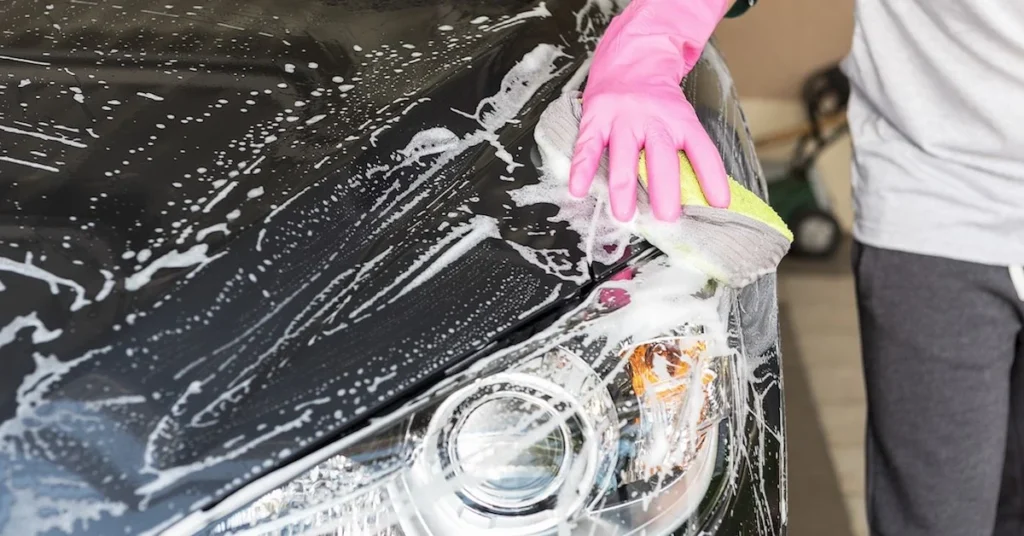
H3: Car wash, waxing/sealant, paint protection, minor scratch repair
Keeping the exterior clean preserves paint, avoids rust and increases resale value. According to detailing blogs, small scratches and dust accumulation degrade finish over time. The Detailing Mafia+1
Exterior Routine:
- Wash the car every 7-14 days (urban/high dust) – using two-bucket method, microfibre cloths, pH-neutral shampoo.
- After wash, apply wax or sealant every 3-4 months to provide layer of protection.
- Use paint protection film (PPF) or ceramic coating especially if parked outdoors in sun or coastal zone.
- For minor scratches: rub with scratch-remover polish or soft compound.
- Under-body rinse: especially after monsoon/water logging—wash off mud, salt and grime that can lead to corrosion.
Interior Care: - Vacuum seats, carpets monthly.
- Use soft cloth and mild cleaner for dashboard/leather. Avoid harsh chemicals; leather conditioner every 6 months.
- Clean upholstery stains immediately; prevent mildew by keeping moisture away.
- Rear-seat/pet cover if you carry children or pets regularly—and clean regularly.
Exterior & interior care not only makes the car look good—it preserves value and saves long-term cost.
H3: Cleaning wheels, rims, under-body rinse (especially for Indian roads)
Wheels and under-body are often neglected—but Indian roads (dust, salt, mud, sand) can aggressively wear rims, brake dust, chassis.
DIY Tasks:
- Use dedicated wheel cleaner (non-acidic) and brush to remove brake dust; leave for 10 minutes and rinse.
- After muddy drive, rinse under-body and chassis thoroughly. Use hose at roadside or local car-wash. Prevents rust and mechanical wear.
- In coastal or salt-belt areas, rinse every 2-3 months with fresh-water spray.
- Inspect rims for curb-scrapes which can harbour rust spots.
Regular cleaning here prevents rust, extends brake life, and improves aesthetics.
H3: Interior cleaning: vacuuming, upholstery maintenance, dashboard/leather care
Interior is often overlooked but matters for comfort, health (air-quality) and resale. Indian cities have dust, pollution and monsoon moisture to contend with.
DIY Routine:
- Vacuum footwells, boot area and seats. Remove debris, dust and grit which damage fabric/leather over time.
- Use microfiber cloth and cleaner for dashboard, console, door-pads. Use UV-shield spray to prevent cracking under hot sun.
- Clean leather seats with dedicated cleaner + conditioner. For fabric seats, use fabric cleaner on stains.
- Remove mugs/food wrappers after drives; moisture and pests can damage interiors.
- Keep boot/footwell dry; after rainy day slightly crack window or run AC to remove moisture.
By maintaining interiors you also improve driving comfort and preserve value.
H3: Seasonal cleaning tips: monsoon, summer, coastal conditions
Because India’s climate varies enormously, seasonal care matters.
- Monsoon: Clean under-body, check door/boot seals, ensure wipers working. Remove mud/silt after water-logging.
- Summer: Park in shade, apply UV-protectant to plastics/leather, wax paint more often. Check tyre pressure (heat affects).
- Coastal/salt-belt zones: Rinse with fresh-water regularly, under-body protection spray, check wheel-arches and underbody for rust starting.
Routine seasonal tasks prevent region-specific damage and keep maintenance cost down.
H2: DIY Mechanical Checks & Minor Fixes
H3: Changing engine oil & filter (when feasible)
Changing engine oil is one of the most valuable mechanical DIY tasks—but requires caution. Many Indian DIY blogs cover this. autodukan.com+1
Steps:
- Warm up engine slightly, park on level ground, engage handbrake.
- Place drain-pan, unscrew drain-plug (wear gloves). Let oil drain completely.
- Replace oil filter (once removed, apply little new oil to gasket).
- Refit plug to specified torque; fill recommended oil grade and amount.
- Run engine, check level and leaks.
Important: Check manufacturer’s guarantee/warranty coverage. Some service centres may void warranty if non-OEM parts/stickers removed. Use genuine oil grade.
For many users in India, doing oil + filter every second interval and paying for full service interleaved may be cost-effective.
H3: Replacing basic components: wiper blades, bulbs, fuses
These tasks are easy and perfect for DIY. As CarVaidya highlights: replacing wipers, bulbs, fuses saves cost and time. CarVaidya+1
- Wiper blades: Remove old via clip, slide in new, test sweep.
- Bulbs: Identify correct bulb type from manual, access via trunk/engine bay, install without touching glass surface (finger-oil can shorten life).
- Fuses: Locate fuse-box (engine bay or cabin), remove blown fuse, insert new same rating. These tasks cost little and boost safety/legality.
H3: DIY inspecting suspension, alignment, brake pad visual checks
Some inspection tasks can be DIY though repairs may need workshop:
- Suspension: Press down each corner of car; if it bounces repeatedly, shock absorbers may be worn.
- Visual brake pad check: Remove wheel (if capable), inspect pad thickness (>3mm advisable) and disc condition.
- After hitting big pothole or curb: check wheel alignment sense (car pulling), tyre wear.
These inspections help you decide whether to book service sooner rather than later—preventing costlier damage.
H3: When to stop DIY and seek professional help
Important to know your limits. DIY is great for simple, low-risk tasks; but certain areas should always be done by professionals:
- High-voltage systems in hybrids/EVs (unless certified).
- Clutch/gearbox major repairs.
- Air-bag/ADAS calibration.
- Extensive welding/rust-proofing in chassis.
- Any repair that if done incorrectly could endanger safety (brake hydraulics, fuel-line repairs).
Some DIY blogs caution about incorrect brake repairs causing pedal sink. The Sun
When in doubt, pay the professional cost rather than risk safety or large future bills.
H2: DIY Care for New Tech Cars (Hybrids, EVs, Connected Cars)
H3: What’s different in 2025: hybrid/EV systems, sensors, connectivity features
In 2025 India a growing number of car owners choose hybrid or EV cars, or higher-variant ICE cars with ADAS, sensors, connected features. DIY maintenance now has to account for:
- High-voltage battery and associated cooling, wiring.
- Sensor-cameras for ADAS, laser/radar modules in bumper.
- Software/firmware updates (often via dealership).
- Electric motor/transmission differences.
For traditional DIY thinkers it means there are more “do-not-DIY” zones—but also many routine tasks (tyre, fluid, battery, cleaning) remain similar.
H3: DIY tasks suitable for EV/hybrid owners (battery check, tyre/under-body)
EV/hybrid owners can still do many smart maintenance tasks:
- Tyre pressure tread & wheel‐alignment (EV weight often higher).
- Under-body rinse (especially after salty/coastal drives).
- Cleaning of bonnet/interior, vacuuming and ventilation (batteries suffer if moisture collect).
- Cabin filter replacement and HVAC cleaning (life of filter may change due to regenerative braking system).
- Keeping software/update logs and service history; maybe simple fuse/light bulb changes.
Thus even modern tech cars benefit from DIY care—just with a slightly different emphasis.
H3: What not to DIY in modern cars: high-voltage systems, software updates
Avoid DIY for:
- High-voltage battery pack inspection or repair (risk of electric shock)
- Hybrid/EV power electronics, motor removal
- ADAS sensor calibration after accident or panel replacement
- Major body structural repairs in connected cars (sensor mounts)
If these systems fail due to improper DIY, warranty may be void, resale value drops and safety risk rises. Thus knowing boundaries is critical.
H2: Budgeting & Scheduling Your DIY Maintenance
H3: How to create a DIY maintenance calendar for 2025 India usage (city vs highway)
A well-structured calendar helps you stay consistent. Sample schedule:
- Monthly: Check tyre pressures, battery terminal, oil/coolant levels, lights & wipers.
- Quarterly (~3-4 months): Change cabin filter, vacuum interior, exterior wash + wax, check battery voltage.
- Bi-Annually (~6 months): Deep under-body rinse, check suspension visually, wheel alignment after potholes, replace engine air filter.
- Annually: Full inspection, major service (oil/filters/brakes), interior detailing, rust-proof check if coastal.
Tailor your schedule based on usage: city heavy stop-start → more frequent; highway heavy usage → emphasis on suspension/tyre etc.
H3: Cost-effective approach: prioritising high-impact tasks
Some maintenance tasks give high “bang-for-buck”. For example: proper tyre pressure + cleaning battery terminals + changing air filter may cost minimal but prevent major issues.
Spending ₹300 on cabin filter annually vs ₹10,000 on engine repair because of neglected filter = smart choice.
Buying tools once pays off over years. Using DIY logs facilitates negotiation with workshop if you eventually outsource.
Part research: Generic blogs recommend doing 10 DIY maintenance hacks to save money. Spinny+1
H3: Record-keeping, service logs, DIY vs paid service trade-offs
Keep a simple notebook or digital log (phone app) listing: date, odometer, task done, parts/fluids used, cost.
Benefits:
- Helps track intervals and avoid forgetting.
- Builds a maintenance history which boosts resale value.
- Helps you decide when to pay workshop vs DIY.
- You can identify if you’re overspending (e.g., paying workshop for tasks you can DIY).
H3: Tools, parts sourcing, safety gear and setting up your home garage
Sourcing parts: Use genuine/authorized parts where feasible; many Indian parts-suppliers offer aftermarket cheaper parts but quality may vary.
Tools: As listed earlier—spend once, reuse many times.
Safety gear: gloves, eye-protection, jack-stands—the cost is small compared to potential accident or damage.
Home garage: Even a driveway works; use car-cover; keep area clean; designate container for used oil/fluids adhering to local disposal regulations.
DIY preparedness reduces stress and improves results.
Conclusion
DIY car maintenance for Indian cars in 2025 is not just a hobby—it’s a smart strategy. Whether you drive a basic petrol hatch, a feature-rich SUV, a hybrid or an EV, being hands-on with your maintenance builds knowledge, prevents surprises, and saves cost. The key is to know your limits, stay safe, use correct tools and parts, and build a routine.